
A powerful geomagnetic storm could push the northern lights far deeper into the United States tonight — and not just in the usual northern states. For millions of Americans, this isn’t a routine forecast; it’s a rare chance to catch the aurora without boarding a plane to Alaska. Scientists say solar activity has ramped up suddenly, sending charged particles racing toward Earth. The result? A sky that could glow green, purple, and even red in places that almost never see it.

What We Know So Far
Forecasters are tracking a surge of solar energy headed toward Earth — the kind that can supercharge the planet’s magnetic field. When that happens, the aurora borealis expands beyond its usual Arctic circle territory.
This time, the potential viewing zone stretches across as many as 24 U.S. states. That includes parts of the Midwest, Northeast, and even areas farther south than usual. In some forecasts, states like Illinois, Pennsylvania, and Oregon are in the viewing window, with darker rural skies offering the best chance.

Timing matters. Experts say the peak viewing hours are likely between late evening and the early morning hours, roughly 10 p.m. to 2 a.m. local time. That’s when the sky is darkest and solar particles interact most visibly with Earth’s atmosphere.
Here’s the thing — this isn’t just about location. Cloud cover, light pollution, and even the moon phase can make or break your chances. If you’re in a city, you might need to drive out to darker areas. Clear skies are your best friend here.
What’s driving this surge? Increased solar activity tied to the sun’s current cycle. We’re approaching a solar maximum, a period when eruptions and solar storms become more frequent. That’s why sightings like this are becoming a bit more common — but still far from guaranteed.
The Response
This could be one of the more widespread aurora events we’ve seen in recent months.
Astronomy communities and weather trackers have been buzzing with updates. Observers are urging people to stay flexible — conditions can shift quickly, sometimes within hours.
The key is patience. Even in strong storms, the lights can come and go.
Meanwhile, social media has already begun lighting up with early sightings from northern regions, hinting that the storm is unfolding as expected.
What It Means for You
If you’re anywhere near the viewing zone, this is your shot. Not next month. Not next year. Tonight.
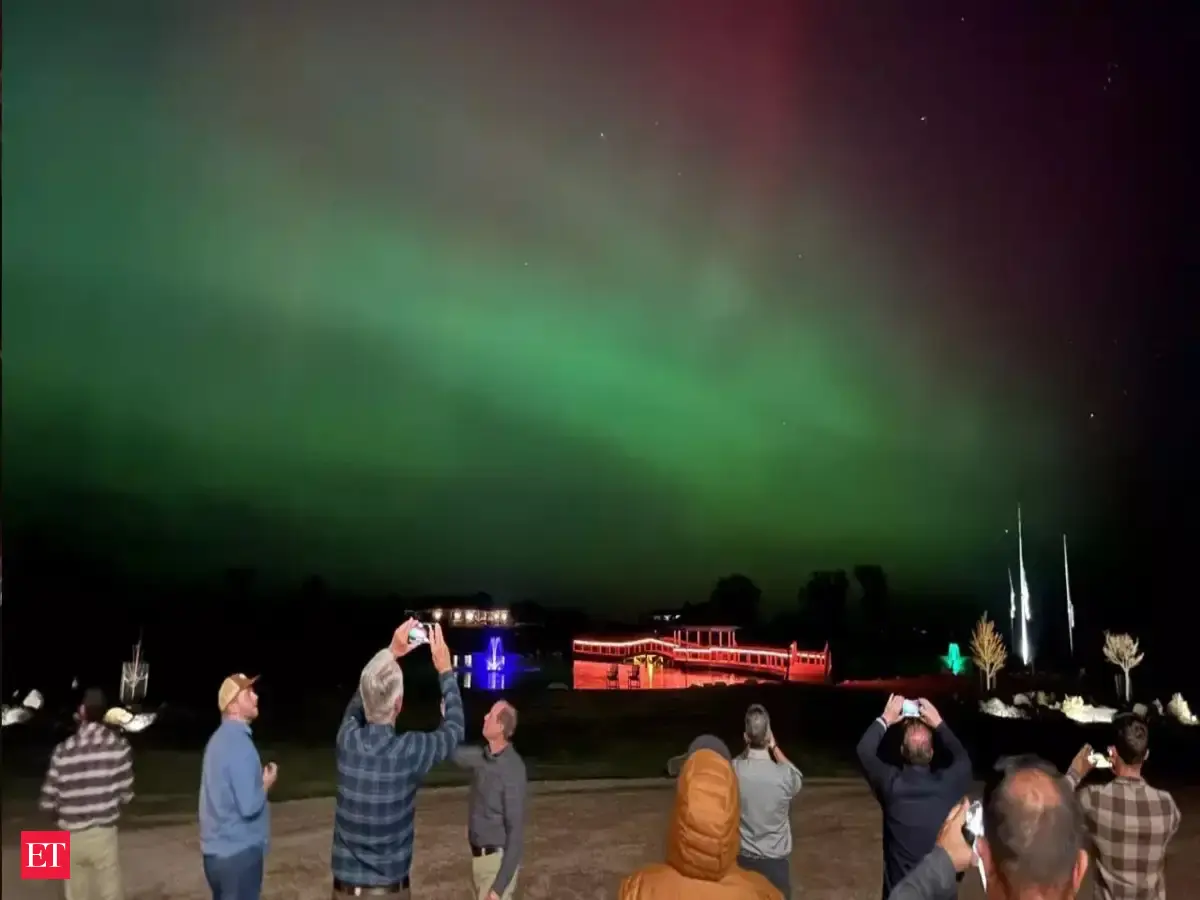
For everyday Americans, this kind of event flips a bucket-list experience into something surprisingly accessible. You don’t need special gear — just your eyes, a dark sky, and a little patience. Smartphone cameras, though, can sometimes capture more color than the naked eye, so it’s worth taking a few shots.
What’s interesting is how this ties into a broader trend. Solar activity has been climbing, which means more frequent chances like this — though each one still depends on precise timing and conditions. If you’ve missed it before, tonight might be your moment.
Coming Up
Scientists will continue monitoring solar activity over the coming days. Additional geomagnetic disturbances are possible, though not all will produce visible auroras this far south. For real-time updates, keep an eye on space weather alerts and local forecasts.
At a Glance
- A geomagnetic storm could make auroras visible in up to 24 states
- Best viewing window: late evening to early morning
- Darker skies significantly improve visibility chances
- Solar activity is increasing as part of a broader cycle
- Conditions can change quickly — flexibility is key
FAQ
Can you really see the northern lights in the U.S. tonight?
Yes, depending on location and weather conditions. Strong solar activity may push visibility into multiple states beyond the usual northern regions.
What time is best to watch the aurora?
Typically between 10 p.m. and 2 a.m. local time, when skies are darkest and solar interactions peak.
Do I need special equipment to see it?
No. The naked eye is enough, though cameras can capture more vivid colors.
Which states have the best chance?
Northern and Midwest states have the highest probability, but forecasts suggest visibility could extend farther south.
What causes the northern lights?
Charged particles from the sun collide with Earth’s atmosphere, creating glowing waves of color in the sky.