
Scientists from the National Oceanic and Atmospheric Administration (NOAA) have finally solved the puzzle of the shiny 'golden orb' discovered two miles beneath the ocean surface off the coast of Alaska. After two years of intensive DNA analysis, researchers confirmed the mysterious object is actually a casing from a deep-sea sponge, putting to rest wild theories of alien eggs or metallic artifacts.

The Full Story
The saga began in late 2023 during the Seascape Alaska 5 expedition, when a remotely operated vehicle (ROV) caught sight of a shimmering, gold-colored mass latched onto a rock. Located at a staggering depth of 10,800 feet (about two miles down), the object was unlike anything the veteran crew had seen. Curiosity killed the cat, as the saying goes, but for these scientists, it sparked a multi-year quest for the truth.
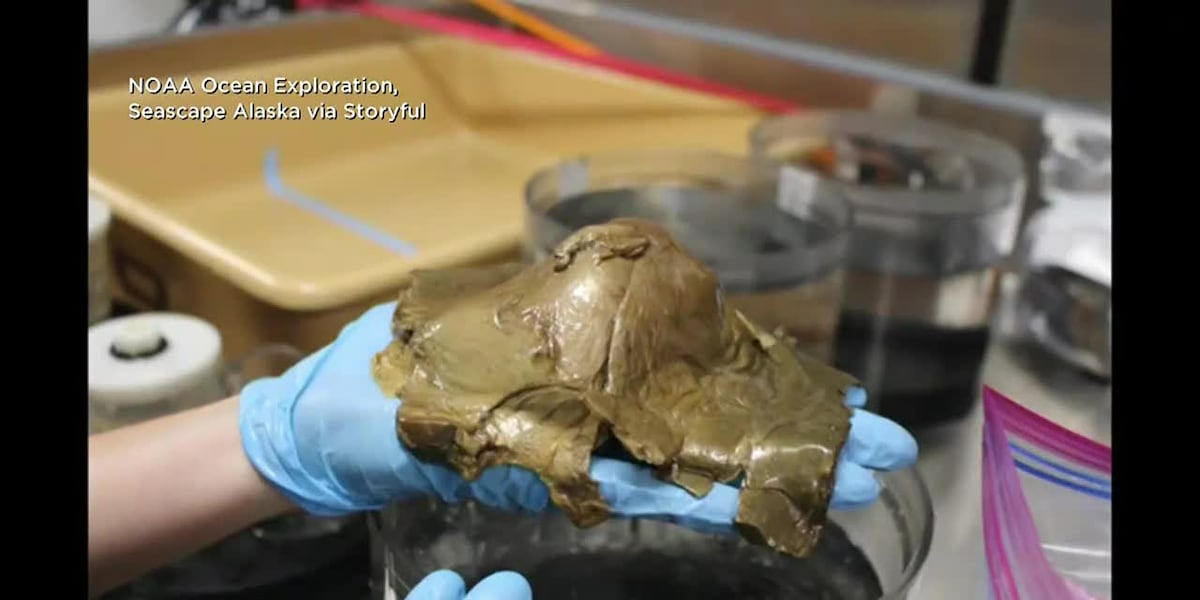
When the ROV first prodded the orb, it felt surprisingly soft, like skin or muscle tissue, rather than a hard shell. Even more baffling was a small hole in its side, suggesting something might have crawled in—or hatched out. The team successfully suctioned the specimen into a collection tube to bring it back to the surface, where its metallic gold luster faded slightly to a brownish-yellow hue.

The identification process wasn't an overnight win. Initial visual inspections left experts divided between a dead sponge or an egg casing. It took a deep dive into the genetic code to find the answer. NOAA's latest report details how DNA sequencing eventually matched the specimen to a known family of deep-sea sponges, though the specific species might be entirely new to science.
The Main Players
- NOAA Ocean Exploration: The federal agency responsible for the expedition and the long-term study of the Gulf of Alaska.
- Seascape Alaska 5 Crew: The team of researchers and ROV pilots who first spotted the orb using the Deep Discoverer vehicle.
- Molecular Biologists: The behind-the-scenes scientists who spent 24 months decoding the specimen's DNA to prove its biological origin.
What This Means
For those of us living on dry land, this discovery is a reminder of how little we truly know about our own planet. The deep sea remains the last great frontier, and finding a 'golden egg' that turns out to be a sponge is actually more exciting for biologists than a simple rock. It suggests a complex ecosystem where sponges produce specialized structures to survive the crushing pressure and freezing temperatures of the abyss.
The identification effectively shuts down the more 'out there' theories that flooded social media when the discovery first trended. While it’s not an alien scout or a piece of sunken treasure, the fact that a sponge can look like a polished gold orb is worth its weight in gold for scientific understanding. It highlights the importance of continued funding for deep-ocean mapping and exploration.
What to Expect
Scientists are now working on a formal peer-reviewed paper to classify whether this sponge belongs to a previously undocumented species. Meanwhile, the ROV footage and DNA data have been added to the global deep-sea database. Expect more weird and wonderful finds as the Seascape Alaska project continues its multi-year mission to map the untracked depths of the US coast.
FAQ
- What was the golden orb found in Alaska?
- It was identified by DNA analysis as a deep-sea sponge casing, not an egg or a metallic object.
- How deep was the mystery orb found?
- It was discovered at a depth of approximately 10,800 feet (3,300 meters) in the Gulf of Alaska.
- Why did the orb look like it was made of gold?
- The golden sheen was a natural biological property that reflected the ROV's lights, though the color dulled once it was brought to the surface.
- Who discovered the specimen?
- The discovery was made by the NOAA Ocean Exploration team during the Seascape Alaska 5 expedition in 2023.