
Last updated: May 29, 2026
What's Behind the Mysterious Sonic Boom Heard Across South Carolina?
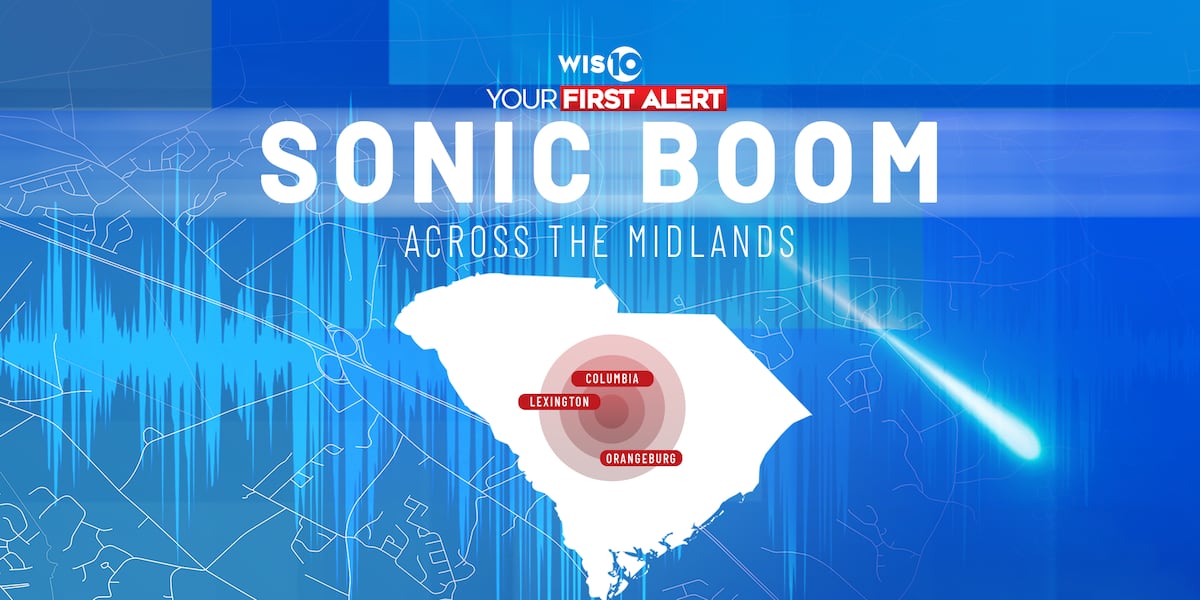
A powerful boom rattled homes, startled residents, and triggered hundreds of reports across South Carolina's Midlands on May 28 and 29. Experts now believe the sound may have been linked to a meteor entering the atmosphere, though investigators are still reviewing evidence.
The event was strong enough to shake buildings and spark widespread speculation. For many residents, the biggest question remains simple: what exactly caused it?

The Full Story
The mystery began when residents from multiple communities across South Carolina reported hearing an explosive sound accompanied by vibrations. Some described it as thunder. Others compared it to an explosion or a low-flying aircraft.
Emergency agencies and scientific organizations quickly began examining possible causes. Early theories ranged from military aircraft activity to seismic activity. However, officials later ruled out an earthquake after geological monitoring systems detected no corresponding seismic event.
As more information emerged, attention shifted toward the sky. Meteor experts and weather specialists suggested the boom could have been caused by a meteor breaking apart as it entered Earth's atmosphere. Such events can generate shock waves powerful enough to be heard over large areas.
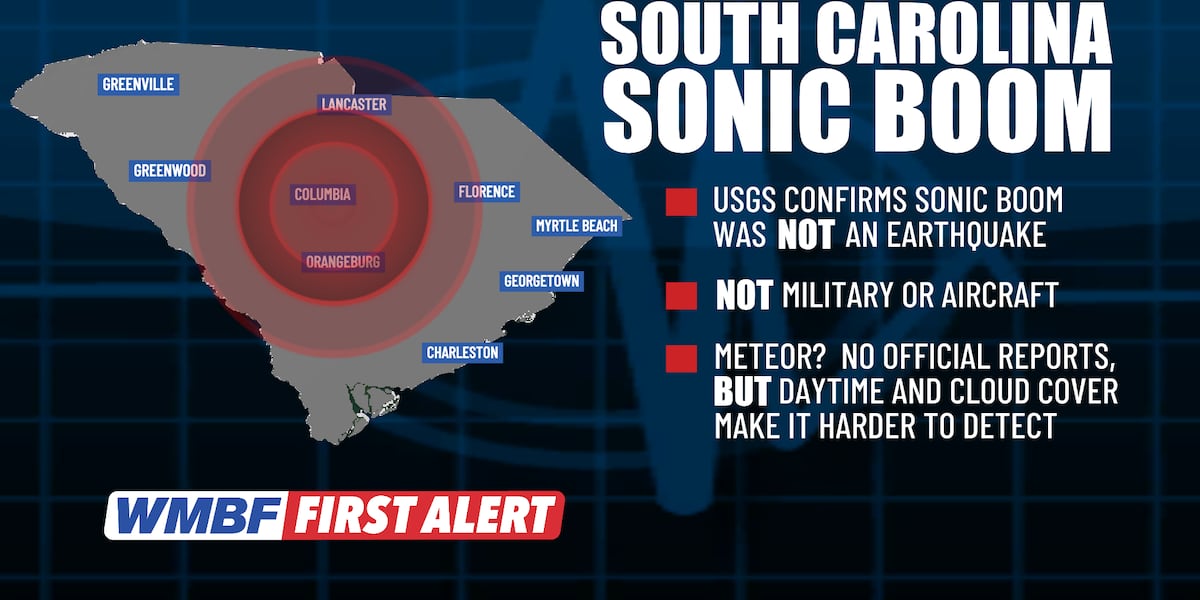
Meanwhile, eyewitness accounts continued to pour in from across the region. The wide geographic spread of reports added weight to the meteor theory because atmospheric events can affect large areas without leaving obvious physical evidence on the ground.
If you're following this story closely, you might be wondering why investigators have not reached a final conclusion yet. The answer is straightforward: atmospheric events can be difficult to verify unless radar, satellite, or visual evidence clearly captures the object involved.
Key Figures
- Geological monitoring experts who confirmed no earthquake activity was detected.
- Meteorologists and atmospheric scientists examining evidence of a possible meteor.
- Emergency management officials gathering public reports and observations.
- Residents across South Carolina who provided eyewitness accounts of the event.
- Sonic Boom
- A shock wave produced when an object travels faster than the speed of sound.
- Meteor
- A space rock that becomes visible when entering Earth's atmosphere.
- Shock Wave
- A sudden pressure change that travels through air and can create loud sounds.
Facts & Figures
- Reports came from numerous communities across the South Carolina Midlands.
- The boom was heard and felt over a broad geographic area.
- Earthquake monitoring systems found no seismic event linked to the incident.
- Experts identified a meteor as one of the leading explanations under review.
What This Means
Events like this are rare, but they are not unheard of. Similar atmospheric booms have been reported elsewhere in the United States when meteors entered the atmosphere or when aircraft generated powerful shock waves.
For residents, the incident highlights how natural and human-made phenomena can sometimes create dramatic effects without causing damage. It also shows why scientific verification takes time. A loud boom may sound alarming, but identifying its source often requires data from multiple agencies.

For people across the United States, especially in regions with active military airspace or frequent meteor sightings, this serves as a reminder that unusual sounds can have surprising explanations. As the saying goes, truth is often stranger than fiction.
What to Expect
Scientists and officials are expected to continue reviewing radar data, satellite observations, and public reports. Additional findings could either strengthen the meteor explanation or point investigators toward another source.
Residents may also be asked to share photos, videos, or observations that could help reconstruct exactly what happened.
FAQ
What caused the sonic boom in South Carolina?
Experts currently believe a meteor is one of the most likely explanations, but the investigation remains ongoing.
Was it an earthquake?
No. Geological monitoring systems reported no earthquake associated with the boom.
Could it have been an aircraft?
That possibility was considered, though experts have focused heavily on atmospheric explanations.
Why was the sound heard across such a large area?
Shock waves from atmospheric events can travel long distances and affect multiple communities.
Did the event cause damage?
Reports focused mainly on loud sounds and vibrations rather than significant damage.
Will investigators determine the exact cause?
Additional data review may provide a more definitive explanation in the coming days.