
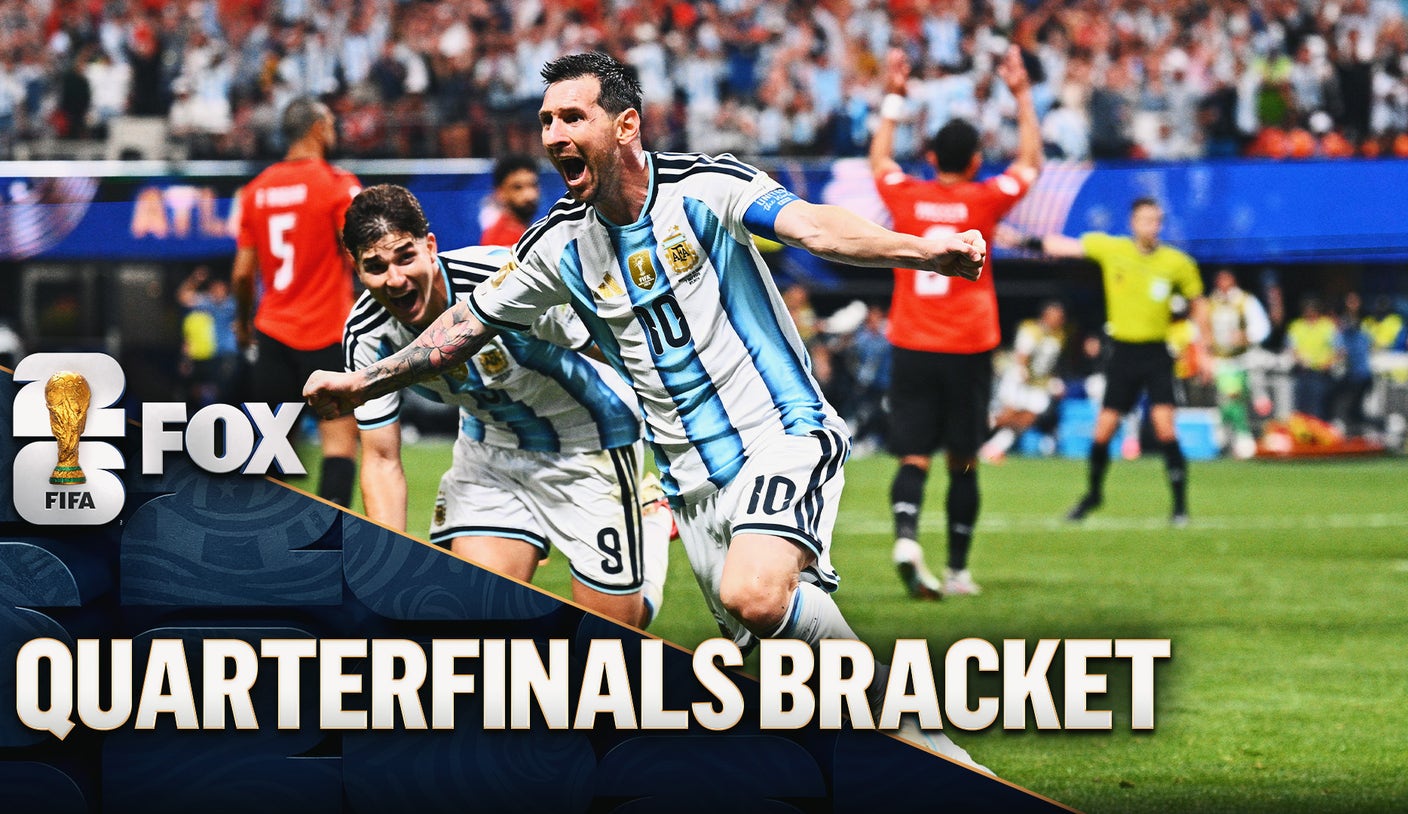
The Mercedes-Benz Stadium in Atlanta was a cauldron of pure noise as Lionel Messi stood over the ball, his side staring down a shocking 2-0 deficit against Egypt with just over twenty minutes left on the clock. What followed was a breathless blitz that turned agony into a historic 3-2 victory, propelling the reigning champions into the elite eight. The dramatic escape officially cements the final piece of a powerhouse 2026 FIFA World Cup quarterfinal field, ending a brutal Round of 16 that completely cleared out the tournament's North American host nations.
How Events Unfolded
The path to the final eight has been nothing short of a meat grinder for the pre-tournament favorites. Reigning champions Argentina were pushed to the absolute edge by an inspired Egyptian squad that built a stunning 2-0 lead lasting deep into the second half. It took a ferocious late rally, with three goals hammered home in the final 20-plus minutes, to rescue the South American giants and keep Messi’s quest for back-to-back titles alive on American soil.
Meanwhile, the heavy-hitting European contingent marched forward with varying degrees of difficulty. France booked its spot in the quarterfinals by relying on a critical penalty kick from Golden Boot frontrunner Kylian Mbappé to break a stubborn Paraguay side 1-0. Spain also flexed its technical superiority in a tightly contested Iberian derby, silencing Portugal 1-0 after midfielder Mikel Merino found a breakthrough in the dying moments of stoppage time.
England had an equally chaotic route, grinding out a frantic 3-2 victory over co-hosts Mexico in front of a hostile, feral crowd at the iconic Estadio Azteca. The Three Lions were forced to defend their slim lead while playing a significant portion of the second half with only 10 men. The victory setup a highly anticipated clash against tournament darlings Norway, who secured their spot after Erling Haaland bagged a brace to stun South American powerhouse Brazil 2-1.
The Fine Print
A closer look at the tournament dynamics explains why this bracket has turned into such a volatile spectacle. The expansion to a 48-team tournament structure initially raised concerns about diluted quality, but the relentless travel across three host nations and intense physical demands have instead produced late-game vulnerability. Teams that prioritize possession are hitting physical walls, leading to an unprecedented surge in late winning goals and dramatic tactical collapses in final minutes.

The statistical realities of the remaining contenders emphasize the elite level left in the tournament. France enters the next phase as a massive statistical juggernaut, having racked up 16 total goals so far, with Mbappé claiming 7 of those strikes to bring his career World Cup tally to 19 goals. On the defensive end, French keeper Mike Maignan has been a wall, conceding a mere 2 goals across his 5 tournament appearances. They face a Moroccan team operating on an astronomical 34-game unbeaten streak, setting up a clash between the tournament's most lethal offense and its most resilient defense.
The Response
The intense tournament drama has drawn massive reactions from tactical analysts and team leaders across the globe. Pundits have marveled at the sheer consistency of the world's most recognizable superstars in North America, a rarity in modern tournaments where fatigue usually drains top-tier talent. The emergence of younger creative focal points has also completely reshaped how teams approach the final third of the pitch.
Reflecting on the unique tactical environment that has allowed high-intensity attacks to thrive, journalists have pointed directly to the environmental conditions in host cities. The mixture of high altitude, heat, and organizational choices has fundamentally altered match pacing, allowing teams to find late wind tunnels.
Putting It in Perspective
For soccer fans across the United States, the ultimate fallout of the Round of 16 is bittersweet. All three co-hosting nations—the U.S., Canada, and Mexico—have officially been dumped out of the tournament. The young American squad suffered a heavy 4-1 thrashing at the hands of Belgium's experienced generation, closing the door on a dream run on domestic territory. From the quarterfinals onward, the United States will host every single match of the tournament, turning American stadiums into neutral battlegrounds for foreign powers.

The financial and cultural implications are massive. While local fans won't see their home jerseys on the pitch, the allure of seeing Messi, Mbappé, Haaland, and Harry Kane compete in high-stakes, single-elimination soccer ensures ticket markets and fan zones will remain completely flooded. The tournament now transitions entirely into NFL palaces, starting with matchups at Gillette Stadium and SoFi Stadium.
Looking Ahead
The quarterfinal schedule is officially locked in, promises a blockbuster slate of matches. Action kicks off on Thursday, July 9, as France squares off against Morocco in Foxborough. Friday, July 10, brings an elite tactical battle between Spain and Belgium at Los Angeles Stadium. The weekend concludes with a Saturday doubleheader: England meets Norway in Miami, while Argentina awaits the final survivor of the Round of 16 in Kansas City to complete the semifinal puzzle.
People Also Ask
Which teams made it to the 2026 World Cup quarterfinals?
The confirmed quarterfinalists include France, Morocco, Spain, Belgium, England, Norway, and Argentina. The final spot will be determined by the concluding Round of 16 matches.
Are any of the World Cup host nations still in the tournament?
No, all three co-host nations have been eliminated. Canada lost 3-0 to Morocco, Mexico was defeated 3-2 by England, and the United States fell 4-1 to Belgium.
Where will the World Cup quarterfinal games be played?
The quarterfinal matches will be hosted across major stadiums in the United States. Confirmed venues include Gillette Stadium in Foxborough, SoFi Stadium in Los Angeles, Hard Rock Stadium in Miami, and Arrowhead Stadium in Kansas City.
Who is currently leading the Golden Boot race at the World Cup?
Kylian Mbappé of France and Lionel Messi of Argentina are leading the race, with Mbappé having scored seven goals so far in the tournament. Erling Haaland is also in close contention after his multi-goal performances.