
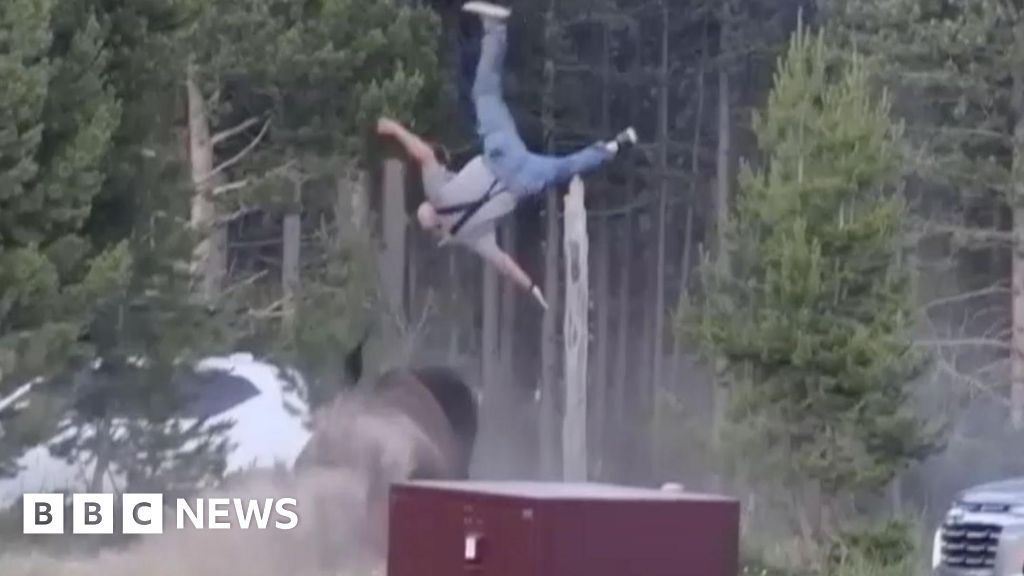
A serene summer evening at Wyoming's Yellowstone National Park quickly dissolved into absolute chaos when a massive, 2,000-pound bull bison charged a grandfather and his grandson. The horrifying encounter, caught on camera by an onlooker, culminated in the 65-year-old man being violently flung into the air like a ragdoll. On July 10, Carl McDaniel of Kendall, Washington, sustained multiple broken bones and severe leg injuries but is currently recovering following a successful surgery.
How Events Unfolded
The incident occurred around 8:30 p.m. on Friday evening at the Bridge Bay Campground, situated near Lake Yellowstone, during the final hour before sunset. Campers first noticed the solitary, 2,000-pound bull bison roaming and running around the tents, prompting people to shout warnings to others in the vicinity. Before zeroing in on McDaniel, the agitated animal charged a small group of teenage boys who luckily managed to escape.
McDaniel and his grandson, who was wearing a Miami Dolphins jersey, slowed down their walk and raised their cameras to photograph the bison as it lay resting in the grass. The animal suddenly began flipping onto its side in an increasingly agitated manner before hopping back onto its feet. A white truck rolled up to the scene, but when the bison charged at the vehicle, the driver quickly sped away.
The bison then turned its attention to McDaniel and his grandson. In a desperate bid to escape, the pair ran into a thicket of trees, but the massive beast rapidly caught up. The bison hooked McDaniel with its left horn on his hip and threw him roughly eight feet into the air. Eyewitness Mike MacLeod, a local photographer who recorded the viral video, noted that McDaniel made a perfect flip and landed hard on his side. MacLeod jumped up and down, screaming to distract the angry animal, which was standing directly over the fallen grandfather, pumping its head and stomping.
Critical Details
National Park Service regulations explicitly state that visitors must maintain a minimum distance of 25 yards from large wildlife like bison. However, summer is Yellowstone’s peak visitation season, with nearly 60% of the park’s annual visitors arriving in June, July, and August, often leading to crowded campsites and close encounters. Many visitors fail to realize that bison, despite their heavy appearance, are incredibly agile and can sprint up to three times faster than humans.
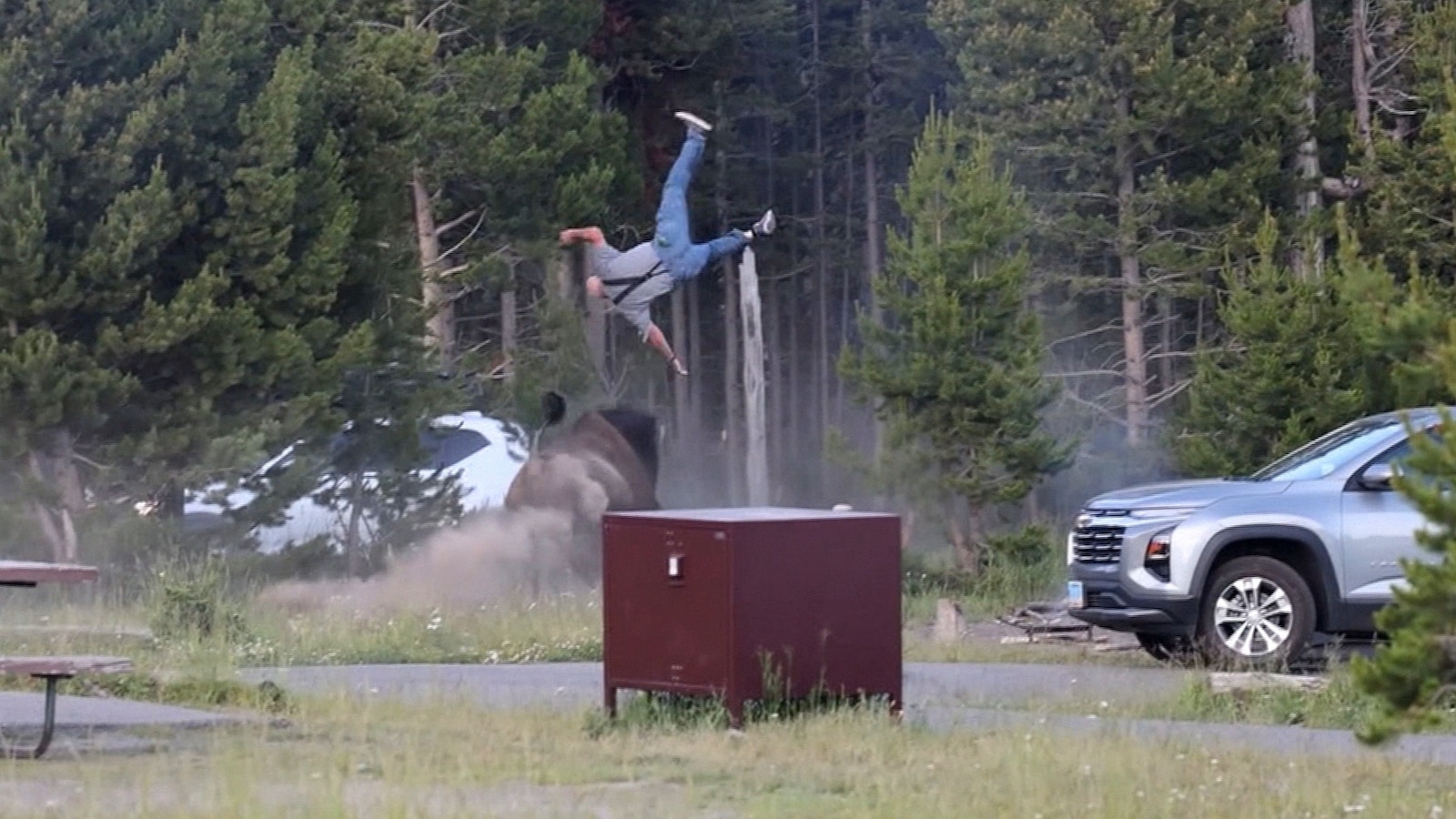
The primary driver behind the animal's highly unpredictable behavior was the timing. July coincides with the peak of the bison rut, the annual mating season where testosterone levels in bulls are severely elevated. This biological surge makes male bison extremely protective of their territory and highly combative, posing an heightened threat to anyone on foot.
Reactions & Responses
Wildlife experts warn that approaching these wild animals for photos is a recipe for disaster, regardless of how calm they appear. Jennifer Barfield, the scientific lead at Colorado’s Laramie Foothills Bison Conservation Herd, pointed out the inherent danger of the mating season.
That's really going to drive their behaviour, and they're going to be potentially more unpredictable than at other times of the year.
Ron Magill, a conservation liaison at the Zoo Miami Foundation, strongly advised that if someone unexpectedly finds themselves near a bison, they should never panic. He noted that the best course of action is to move away slowly and avoid making sudden, rapid movements that the animal might perceive as a challenge or threat.
The viral footage of the flip has drawn mixed reactions online, especially after the Tampa Bay Buccaneers used the video in a social media promotion. The NFL team posted a clip of the flip accompanied by banjo music, cutting to Tampa Bay wide receiver Tez Johnson performing a mid-air backflip after a touchdown with the caption: "Flipping out because it's almost football season." While many online users criticized the team for capitalizing on a painful, real-life injury, the Buffalo Bills have reportedly discussed bringing McDaniel and his grandson to their new stadium for a Week 11 matchup against Miami.
Putting It in Perspective
The incident is a stark reminder of the dangers humans face when encroaching on wild habitats. According to park statistics, bison have injured more people in Yellowstone than any other animal. For residents in the US planning summer road trips to national parks, the event highlights the crucial necessity of following wildlife safety guidelines.
McDaniel is well-known in East Whatcom County, Washington, where he has lived for 25 years. He serves on the boards of the Foothills Community Alliance and the Columbia Valley water and parks districts, and is a passionate advocate for local park building. Despite his severe injuries, MacLeod reported that McDaniel remained in good spirits and joked with paramedics while waiting for the ambulance, his immediate concern being the safety of his unharmed grandson.
Looking Ahead
McDaniel is currently recovering in a regional hospital following orthopedic surgery for his broken bones. National Park Service rangers have reiterated that wildlife guidelines will continue to be strictly enforced. As the bison mating season continues through August, park rangers will be monitoring campsites and high-traffic tourist areas closely to prevent further close-contact incidents.
- Bison Rut
- The annual mating season of the American bison, typically occurring in July and August, characterized by heightened male aggression and territory battles.
- 25-Yard Rule
- The minimum safety distance mandated by the National Park Service for visitors to maintain from large park wildlife, including bison, elk, and deer.
Frequently Asked Questions
Who was the man injured in the Yellowstone bison attack?
The victim is Carl McDaniel, a 65-year-old community leader from Kendall, Washington, who serves on several local parks and community alliance boards.
What triggered the bison to charge at the visitors?
The incident occurred during the peak of the bison mating season, or rut, when bull testosterone levels are high. The bison was already highly agitated, rolling in the grass and charging a truck, before charging McDaniel and his grandson when they stopped to take a photo.
How badly was the grandfather injured?
McDaniel was thrown approximately eight feet in the air, landing on his side. He suffered multiple broken bones and leg injuries that required major surgery, though he is expected to make a recovery.
How close can visitors safely get to bison in Yellowstone?
The National Park Service requires all visitors to stay at least 25 yards away from bison, elk, deer, moose, and bighorn sheep at all times.