
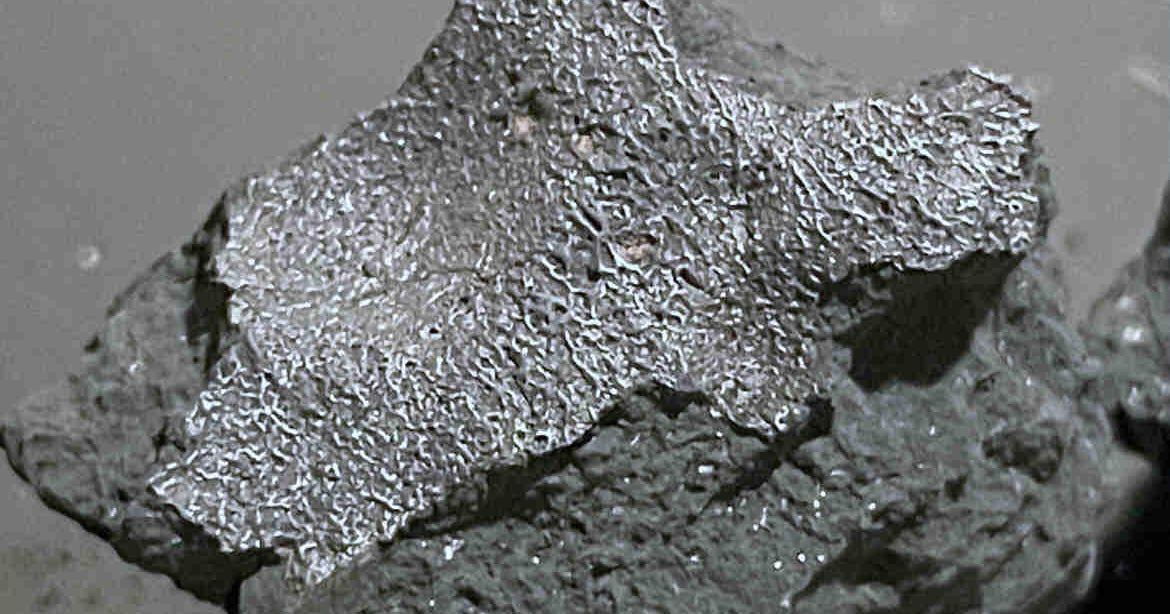
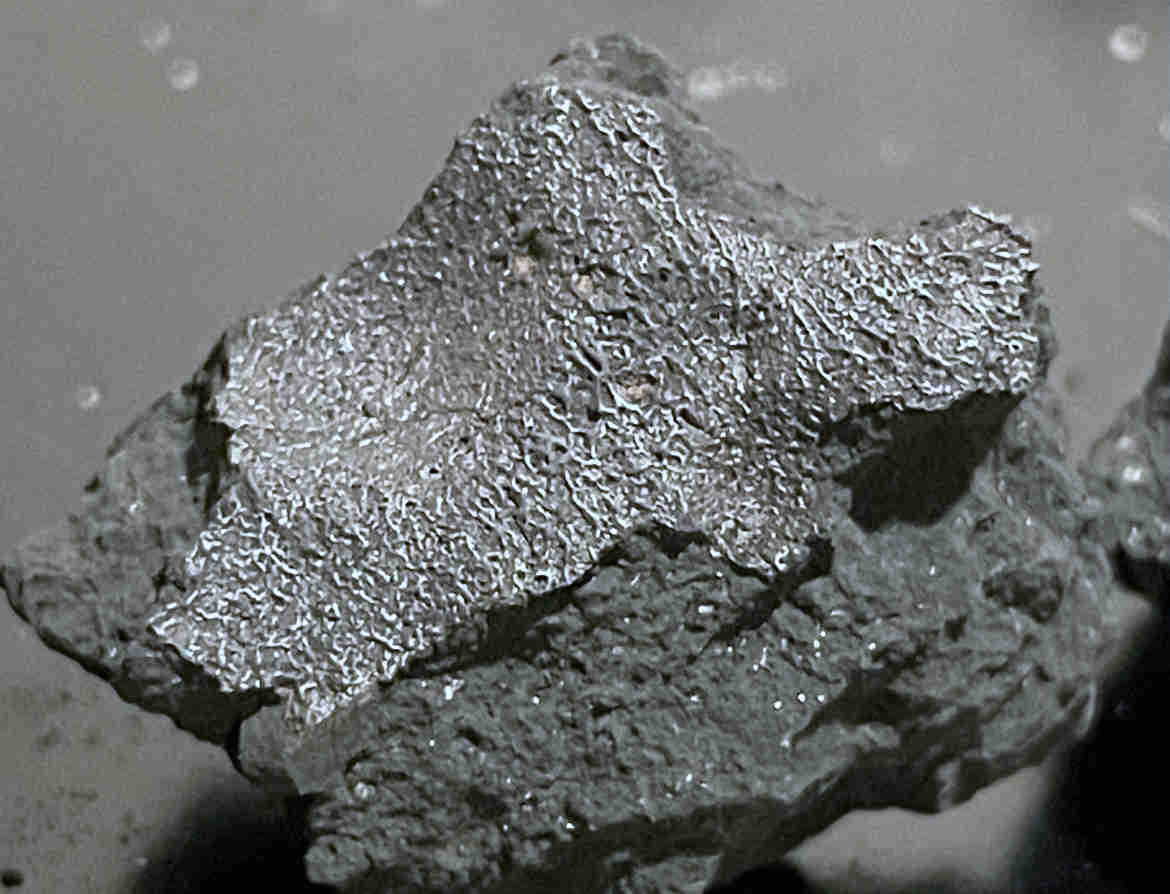
An international team of scientists published a study on Wednesday showing that a meteorite that crashed into a New Jersey home in July 2024 contains pristine evidence of liquid salt-water processes from a primitive asteroid. The rapid recovery of the space rock by a quick-thinking homeowner preserved ancient sodium-carbonate salts and organic compounds that would otherwise have been destroyed by Earth's atmosphere.
The Full Story
On July 16, 2024, a rock the size of a heavy airline suitcase entered Earth’s atmosphere at 32,000 miles per hour, rattling New York and New Jersey with a sonic boom before falling. While Doppler weather radar at Newark Airport detected a falling cloud of pebbles, one large fragment weighing over two pounds crashed through the ceiling of a home in Hillsborough, New Jersey. The homeowner, hearing a loud crash and noticing a strong sulfur-like odor, found his bedroom bed and carpet covered in black dust and debris.
Instead of cleaning up blindly, the resident immediately used disposable gloves and aluminum foil to seal the fragments inside glass jars. This quick decision protected the delicate space rock from Earth’s humidity, keeping it perfectly preserved. Scientists from NASA and the SETI Institute have now completed a forensic analysis of these fragments, publishing their findings in the journal Science Advances on Wednesday.
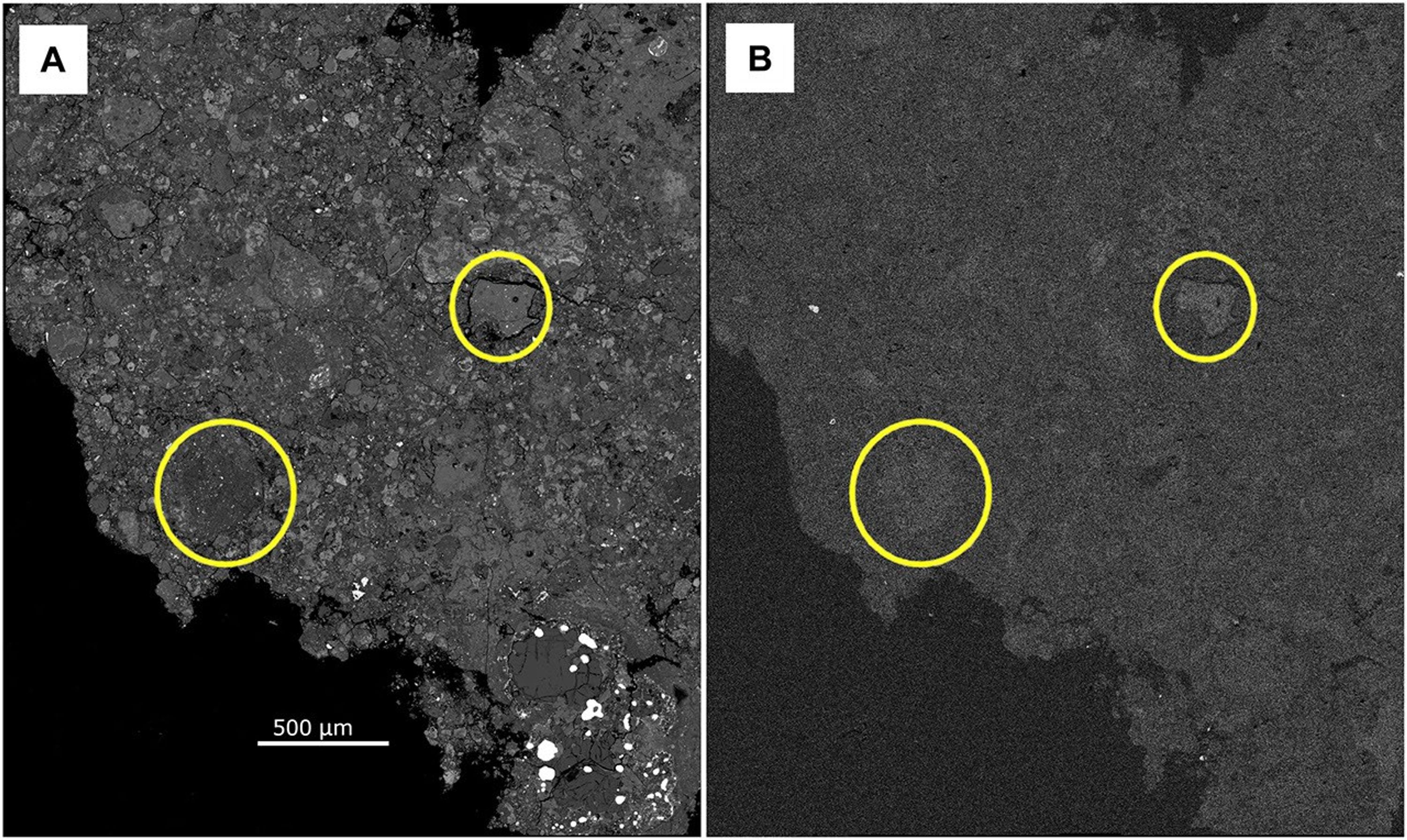
The forensic examination revealed the rock is a CM1/2 carbonaceous chondrite, representing an intermediate stage between highly altered (CM1) and moderately altered (CM2) states. This marks only the 22nd witnessed CM-type fall in history, and only the second ever witnessed fall of a CM1/2 chondrite, following the Kolang meteorite that fell in North Sumatra, Indonesia, in 2020.
Who's Involved
A multi-disciplinary global team pooled their skills to untangle the meteorite's origin:
- Peter Jenniskens: Lead author and meteor astronomer at the SETI Institute and NASA’s Ames Research Center, who led the trajectory and forensic study.
- Mike Zolensky: A meteoriticist at NASA’s Johnson Space Center who analysed the meteorite's water-altered mineral fragments.
- Jangmi Han: A mineralogist at NASA’s Johnson Space Center who identified the microscopic evidence of ancient brines.
- Danny Glavin: Astrobiologist at NASA's Goddard Space Flight Center who analyzed the complex distribution of amino acids.
- Queenie Chan: A cosmochemist at Royal Holloway University of London who analyzed the organic carbon and nitrogen isotopes.
- Philippe Schmitt-Kopplin: Organic mass spectrometry specialist at Technical University Munich who explored the organo-metallic chemistry.
By the Numbers
The chemical analysis and atmospheric entry data revealed remarkable specifics:
- The meteor entered Earth's atmosphere at a staggering speed of 32,000 mph (14.4 kilometres per second).
- The main recovered fragment that struck the bedroom weighed more than 2 pounds (roughly 1 kilogram).
- The rock consists of 1.8% carbon and 0.07% nitrogen by weight.
- 60 observers across five states reported seeing the fireball, while 16 people felt its rattling sonic boom.
What This Means
Finding sodium-rich materials and sodium-carbonate salts within a CM-type meteorite is a massive discovery for astrobiologists. Previously, these briny signatures were only identified directly in space by missions like JAXA's Hayabusa2 from asteroid Ryugu and NASA's OSIRIS-REx from asteroid Bennu. Proving that liquid salt-water processes occurred on the parent asteroid of a CM-type meteorite shows that ancient, salt-rich brines were much more common in the early solar system than previously thought.
This has major implications for how life began. Brines prevent vital ingredients like phosphate from solidifying, letting them dissolve and react with other minerals to form organic structures. The Hillsborough meteorite contains a rich suite of soluble organics, including amino acids, carboxylic acids, and magnesium-organic compounds. For folks in Australia, the organic diversity of the Hillsborough meteorite is being compared directly to the famous Murchison meteorite, which fell in Victoria, Australia in 1969 and remains the ultimate benchmark for space chemistry. This confirms that asteroids have been delivering the ready-made organic ingredients for life to Earth for billions of years.
What to Expect
Following its forensic examination, parts of the pristine Hillsborough meteorite will now go on display and be curated at the American Museum of Natural History in New York City. Scientists are continuing to study the remaining chips to identify the exact salt minerals, comparing them with pristine samples brought back from asteroids Bennu and Ryugu to trace the history of water in our early solar system.
Frequently Asked Questions
- What is a CM1/2 carbonaceous chondrite?
- It is a rare class of primitive, carbon-rich space rock that shows an intermediate level of mineral alteration by liquid water. It sits between highly altered (CM1) and moderately altered (CM2) states, and only two witnessed falls have ever been recorded on Earth.
- How does the Hillsborough meteorite relate to Australia?
- NASA researchers have compared the organic complexity of the Hillsborough meteorite directly to the Murchison meteorite, a benchmark space rock that fell in Victoria, Australia, in 1969. Both suggest that asteroids carried vital prebiotic molecules to Earth.
People Also Ask
Where did the Hillsborough meteorite land?
The two-pound meteorite crashed directly through the master bedroom ceiling of a home in Hillsborough, New Jersey, on July 16, 2024.
How did the homeowner preserve the meteorite?
The homeowner immediately used disposable gloves and aluminum foil to place the meteorite fragments into glass jars, protecting them from terrestrial moisture and contamination.
What did scientists find inside the meteorite?
Scientists discovered ancient sodium-rich salt brines, amino acids, and magnesium-organic compounds, which are key chemical building blocks of organic life.
Where can you see the meteorite now?
Some of the recovered fragments will be curated and displayed at the American Museum of Natural History in New York City.