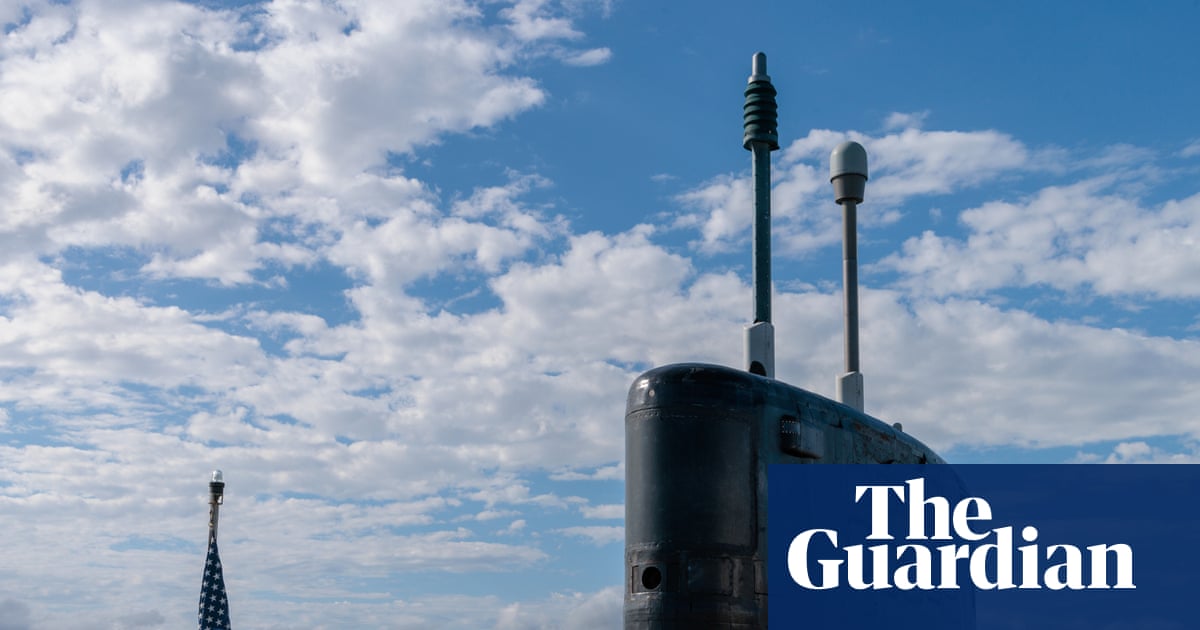
A new U.S. Congressional Budget Office (CBO) report released on November 20, 2026, warns that selling nuclear-powered submarines to Australia under the AUKUS pact would shrink the U.S. Navy's fleet for many years. At the same time, an independent public inquiry in Australia and international labour leaders meeting in London have called for the cancellation of the A$368 billion trilateral security deal. For defence watchers in Canada—a fellow Five Eyes partner weighing its own naval modernization and Indo-Pacific commitments—the widening cracks in Washington and Canberra's flagship submarine plan highlight the steep industrial bottlenecks and sovereignty trade-offs tied to major allied procurement.
What Is Being Proposed
Established in September 2021 by Australia, the United Kingdom, and the United States, the AUKUS security pact is designed to counter perceived Chinese assertiveness in the Indo-Pacific through shared military capabilities. Under Pillar One of the agreement, Washington agreed to sell between three and five in-service Virginia-class nuclear-powered attack submarines to Australia starting in 2032.
Beyond the initial U.S. transfers, the pact outlines the construction of a new fleet of eight nuclear-powered submarines, with British vessels built in Barrow and Australian boats constructed at the Osborne Naval Shipyard in South Australia. The arrangement also involves deep cooperation on cyber and quantum technologies alongside expanded basing infrastructure, including upgrades to HMAS Stirling in Western Australia and a proposed east coast facility near Port Kembla.
What It Would Change
The CBO analysis reveals that fulfilling the submarine transfer would strain an American shipbuilding base already lagging behind domestic targets. Currently, U.S. shipyards build Virginia-class submarines at a rate of 1.13 vessels per year, well short of the 2.0 annual rate required for the U.S. Navy alone and the 2.33 annual rate needed to supply Australia without depleting American undersea forces. Construction timelines have nearly doubled from five to six years in the 2000s to an average of 10 to 11 years today, leaving existing deliveries delayed by 24 to 36 months.
Financially and operationally, the pact reshapes Australia's budget and military footprint over a 40-year horizon:
- Lifetime Price Tag: Official figures commit Australia to spending A$368 billion (£188.8 billion / US$239 billion) on the submarine program, plus at least A$180 billion (£92 billion) to store radioactive nuclear waste.
- Foreign Industrial Subsidies: Canberra is funding half of the design, development, and research costs for British submarines, including facility expansions at Rolls-Royce in Derby, where nuclear reactors are manufactured.
- Allied Basing Presence: Up to 2,300 U.S. personnel and their families are slated to be housed at HMAS Stirling and the Henderson Defence Precinct south of Perth as part of Submarine Rotational Force West.
- Command Autonomy: Under U.S. legislation, the American president can block any submarine transfer without penalty if doing so would degrade U.S. undersea capabilities, while Canberra retains sole authority over whether its submarines deploy in a conflict.
Who Supports and Who Opposes It
In Washington and Canberra, the pact maintains official bipartisan backing from government leaders. U.S. Secretary of Defense Pete Hegseth and Australian Defence Minister Richard Marles reaffirmed their commitment to the alliance in September 2026, with Marles stating earlier in November that AUKUS and the bilateral alliance continue unimpeded. Supporters argue that basing allied submarines in the Western Pacific allows faster response times in any crisis over Taiwan or the South China Sea, potentially offsetting a smaller U.S. fleet.
However, a broad coalition of former leaders, retired military commanders, and labour unions is actively campaigning to scrap Pillar One. In November 2026, an independent Australian public inquiry—led by former environment minister Peter Garrett and former Australian Defence Force chief Admiral Chris Barrie—published a report titled Surrendering Australia, calling the pact the riskiest and costliest defence decision in Australian history.
It may serve the interests of the United States, but it would not serve ours.
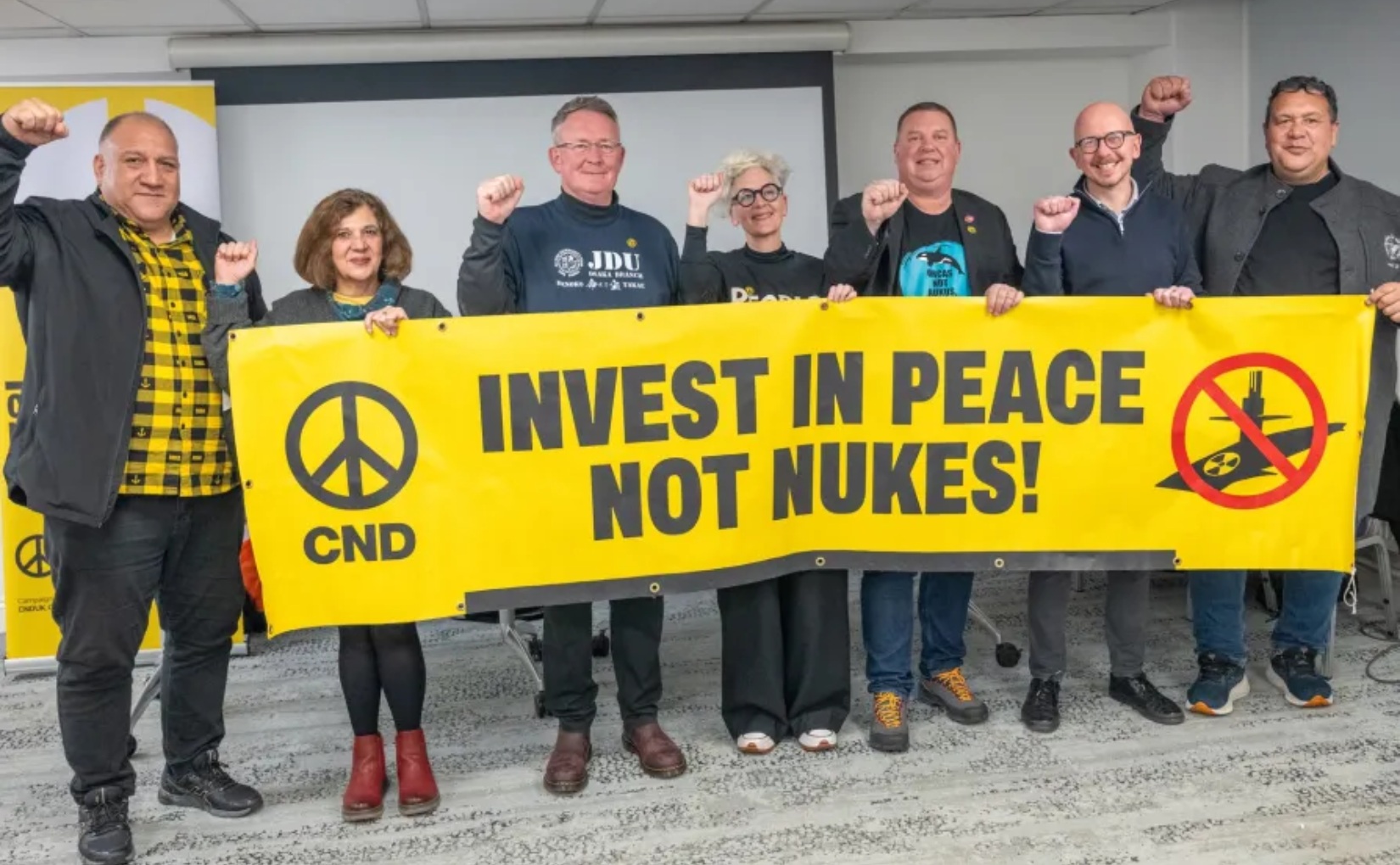
Former Australian prime ministers Paul Keating and Malcolm Turnbull have also condemned the deal, with Turnbull warning that UK shipyards are in disarray and Australia is taking on the financial risk without guaranteed deliveries. Meanwhile, at a November 16 Campaign for Nuclear Disarmament (CND) meeting in London, Maritime Union of Australia deputy national secretary Warren Smith joined British unionists and Labour MP Brian Leishman to oppose the treaty. Smith argued that the pact diverts money from housing, health, and renewable energy, calculates to $19 million per promised job, and threatens Aboriginal communities with nuclear waste dumps reminiscent of 1950s British atomic tests at Maralinga and Emu Field.
Peace is union business. It’s as fundamental a right of workers to fight for peace as it is to fight for a wage rise. Workers die in wars.
The Chinese government has similarly denounced the pact as a textbook case of nuclear proliferation, arguing in state media editorials that transferring weapons-grade highly enriched uranium to a non-nuclear-weapon state undermines the Nuclear Non-Proliferation Treaty and regional nuclear-free zone agreements.
Where Things Stand
Despite official endorsements, internal planning documents suggest deep uncertainty over whether Australia will ever receive the promised vessels. According to the CBO report covered by The Guardian, the U.S. Navy's latest shipbuilding plan omits the AUKUS transfers from its core forecasts entirely, relegating the Virginia-class sale to a single footnote. Former Australian foreign affairs minister Bob Carr described both governments as upholding a fiction, asserting it is now conventional wisdom in Washington and Canberra that the submarines will not be delivered.
In Australia, grassroots and union-led protests have already forced the government to pause the selection of an east coast submarine base after mass opposition centred on Port Kembla, where secret government documents acknowledged a base could become a military target. Across the Atlantic, the UK government's spending watchdog has repeatedly warned that Rolls-Royce's reactor construction programme is behind schedule and unachievable.
What Happens Next
Lawmakers and defence planners face growing pressure to resolve the gap between political promises and shipyard capacity before the 2032 target date for the first submarine transfer. Because U.S. law prohibits any sale that weakens American undersea strength, a future U.S. president could legally cancel the transfer at zero penalty if production rates remain stuck near 1.13 boats a year.
Policy analysts in Washington are already floating alternatives. A January 2026 report from the U.S. Congressional Research Service outlined a revised division of labour in which the U.S. retains ownership and command of the Virginia-class submarines while operating them out of Australian bases—a setup that would guarantee immediate U.S. deployment in a Taiwan crisis while leaving Canberra without sovereign control over the fleet. Meanwhile, the Australian inquiry has urged parliament to immediately terminate Pillar One and establish a special commission to investigate how the agreement was signed, while trade unions across Australia and Britain plan further coordinated actions to halt base expansions.
Frequently Asked Questions
What is the AUKUS submarine deal?
AUKUS is a September 2021 trilateral security pact between Australia, the United Kingdom, and the United States. Under Pillar One, the U.S. agreed to sell three to five Virginia-class nuclear-powered submarines to Australia starting in 2032, followed by joint UK-Australian construction of eight SSN-AUKUS submarines.
Why did the U.S. Congressional Budget Office warn against the deal?
In a November 2026 report, the CBO warned that U.S. shipyards currently build only 1.13 Virginia-class submarines per year—well below the 2.33 annual rate needed to supply Australia without shrinking the U.S. Navy's own fleet for many years.
How much is the AUKUS submarine program expected to cost Australia?
Official estimates put Australia's spending at A$368 billion (US$239 billion) over the 40-year lifetime of the submarines, plus at least A$180 billion to store the resulting radioactive nuclear waste.
Can the United States cancel the submarine sale to Australia?
Yes. Under the terms of the AUKUS agreement and U.S. legislation, the U.S. president can refuse to transfer any submarines to Australia without penalty if losing the vessels would degrade American undersea capabilities.
Would Australia have to use its AUKUS submarines in a war with China?
No. Australian Defence Minister Richard Marles stated that any Australian-flagged submarines would remain under the complete control of the Australian government, with no guarantee they would be deployed in a U.S.-led conflict.