
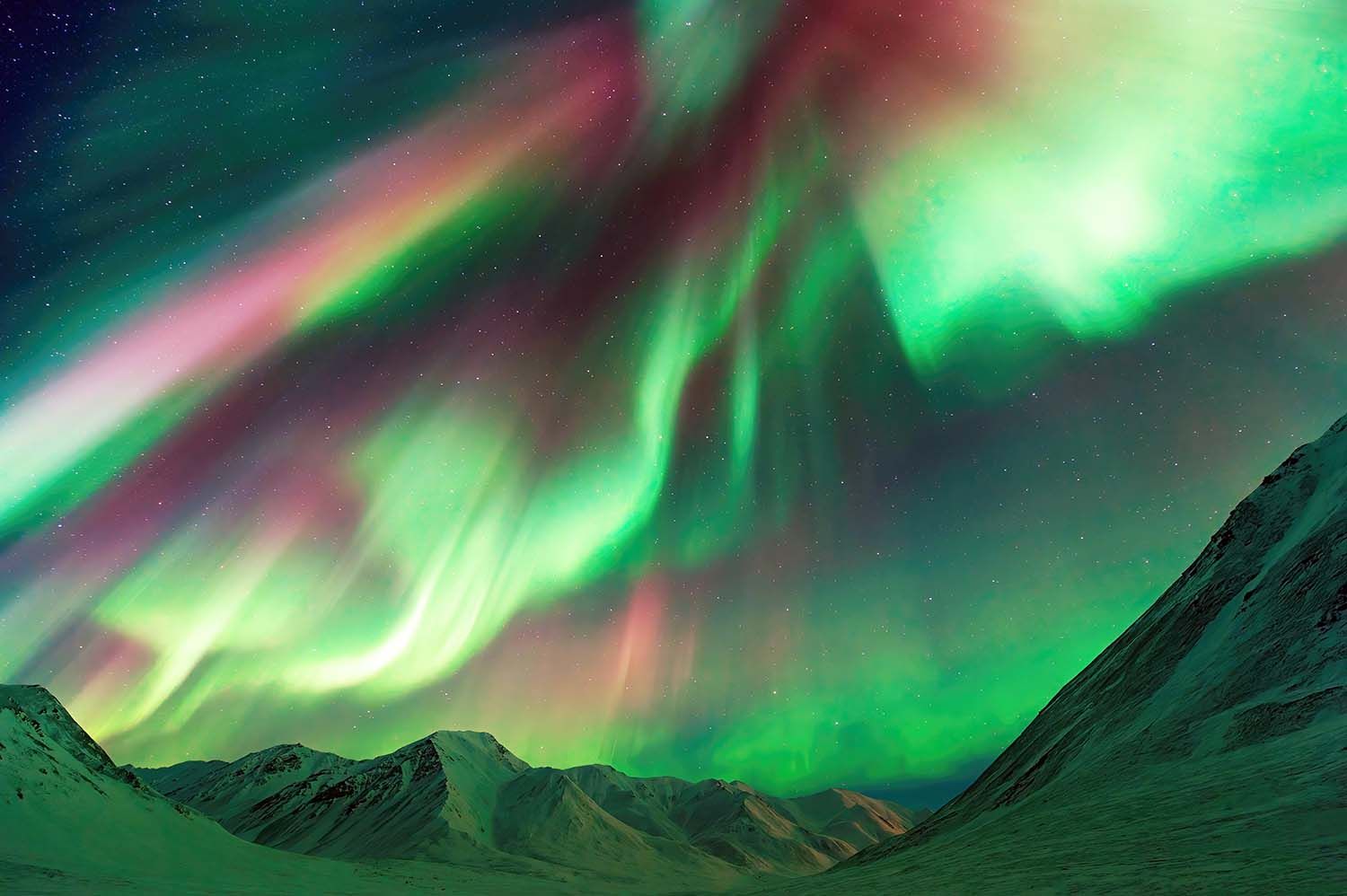
Faint green and violet ribbons are set to shimmer across high-latitude skies overnight as solar winds interact with Earth's upper atmosphere. The National Oceanic and Atmospheric Administration's Space Weather Prediction Center issued a forecast indicating active conditions that push visibility along northern border communities. Skywatchers with clear, dark horizons can spot the celestial display between late evening and the early morning hours.

What People Are Searching For
Online queries have surged regarding whether the aurora borealis will produce a widespread, cross-country event. Observers want to know the exact viewing window, required camera settings, and specific border regions positioned under the auroral oval.
What Is Confirmed
Official models outline specific parameters for tonight's skywatching conditions:
- Forecasters at NOAA's Space Weather Prediction Center project a Kp index around 4 on a nine-point scale, indicating active geomagnetic conditions with brighter motion and formations.
- The optimal viewing window spans from 10 p.m. to 2 a.m. local time, when darkness is deepest.
- Favorable viewing zones include regions adjacent to the Canadian border, covering North Dakota, northern Washington, northern Idaho, northern Montana, northern South Dakota, northern Minnesota, northern Wisconsin, and Michigan's Upper Peninsula.
- Smartphone cameras can capture the faint colors using Night Mode or Pro Mode with long exposure times and a steady tripod.
What Is Unconfirmed
This event is not forecasted to become a severe or extreme geomagnetic storm. Forecasters did not predict any major space weather disturbances that would push vivid displays deep into mid-latitude population centers. Furthermore, in far-northern areas like interior Alaska, late summer sunsets leave twilight in the sky, meaning it has not been determined if skies will darken enough for vivid viewing.
The Bigger Picture
Aurora displays occur when charged particles from solar streams strike atmospheric gases, releasing energy as luminous waves. At a Kp index of 4, the auroral oval expands southward slightly beyond its baseline polar footprint, creating viewing opportunities for border residents who travel away from urban light pollution to elevated vantage points.
Latest Status
Geomagnetic activity remains moderately elevated at Kp 4. Real-time shifts in the solar wind and magnetic field orientation can cause auroral intensity to change within 30 to 90 minutes, making short-term satellite monitors the definitive source for last-minute sightings.
Frequently Asked Questions
- What is the best time to see the northern lights tonight?
- The prime window runs between 10 p.m. and 2 a.m. local time. During these peak night hours, skies reach maximum darkness and geomagnetic activity is easiest to detect.
- What Kp index is forecasted for this event?
- NOAA forecasters project a Kp index of 4 on a 9-point scale. This measurement denotes active space weather capable of producing distinct auroral movement.
- Which areas have the best chance of viewing the aurora?
- Locations close to the Canadian border offer the highest probability. Key areas include North Dakota, northern Montana, northern Minnesota, northern Wisconsin, northern Washington, northern Idaho, northern South Dakota, and Michigan's Upper Peninsula.
- Can you capture the northern lights on a smartphone?
- Yes, smartphones can photograph the aurora using Night Mode or Pro Mode long exposures. Mounting the device on a tripod and turning off the flash yields the clearest results.