
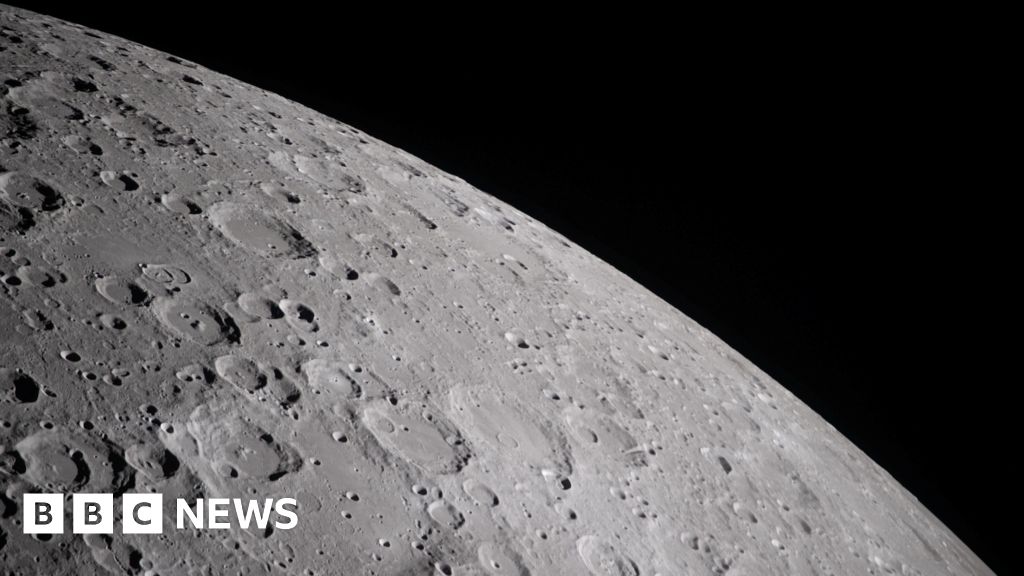
A 4,000-kilogram discarded rocket stage traveling at 5,400 miles per hour slammed into the daylight side of the moon on August 5, marking a rare artificial collision with the lunar surface. The spent piece of hardware, equivalent to the height of a five-storey building, struck near the 180-kilometre-wide Einstein crater. Planetary scientists consider the accidental crash an unprecedented controlled experiment to study crater formation and seismic activity.
What People Are Searching For
Skywatchers and space enthusiasts across Canada and the United States searched the skies and online tracking systems following reports that a abandoned SpaceX upper stage was set to strike the moon. The primary question driving public interest was whether the collision would cause a visible explosion or pose any operational threat to Earth or active space missions. Many wondered how a rocket launched over a year ago ended up on an unintended collision course with the lunar surface.
What Is Confirmed
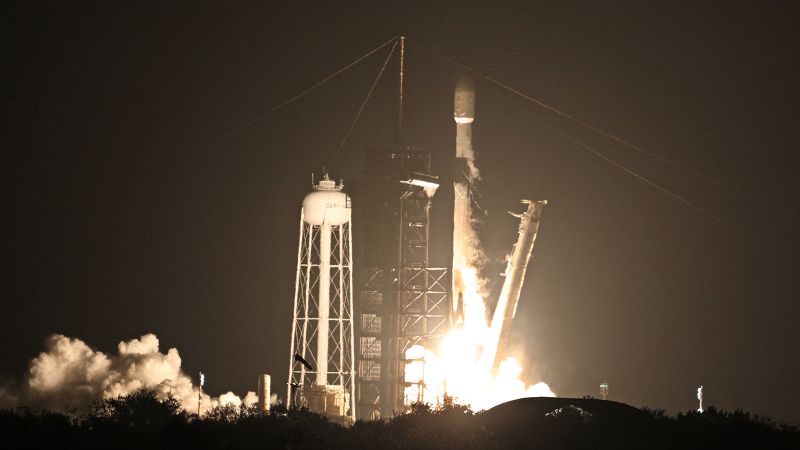
Data confirmed by NASA's Center for Near Earth Object Studies established that the second stage of a SpaceX Falcon 9 rocket hit the moon at approximately 07:35 BST (2:35 a.m. ET) on Wednesday, August 5. The rocket launched from Florida in January 2025 to send two commercial lunar landers—Firefly Aerospace's Blue Ghost 1 and ispace's Hakuto-R Resilience—toward the moon. After deploying the payloads, the second stage remained in a high-energy looping orbit. Gravitational forces from the Earth, Moon, and Sun, combined with solar radiation pressure, gradually altered its trajectory until a lunar collision became inevitable.

The impact had a 100% trajectory certainty prior to collision. Scientists calculated that the crash would form a brand-new crater measuring roughly 60 feet (18 metres) wide and 12 feet (4 metres) deep, while kicking up an ejecta plume of dust and rock stretching across several miles. NASA explicitly stated that the collision posed zero danger to Earth.
What Is Unconfirmed
Because the collision occurred on the illuminated daylight side of the moon, ground-based telescopes in the Americas faced severe difficulties capturing the flash. The visual flash lasted only a fraction of a second, muted by the surrounding sunlight. Optical confirmation and direct imagery of the newly formed crater remain pending. Spacecraft in lunar orbit, including NASA's Lunar Reconnaissance Orbiter and South Korea's Korea Pathfinder Lunar Orbiter (Danuri), were not positioned to record the impact live. Orbital image processing from follow-up flybys will take days or weeks to process and release publicly.
The Bigger Picture
While natural meteoroids hit the atmosphere-less moon every day, human-made impacts are considerably rarer. Historical precedence includes the Soviet probe Luna 2 in 1959, the Apollo upper stages, and NASA's deliberate LCROSS mission in 2009. More recently, a spent booster from a 2014 Chinese mission struck the moon in 2022. For Canadian researchers like Dr. Paul Wiegert of Western University, understanding how debris ejecta travels at high speeds—comparable to bullets—is vital. As space agencies prepare for permanent human bases under the Artemis program, analyzing artificial crashes helps engineers determine safety buffers for habitats, equipment, and astronauts against flying lunar dust.
Latest Status
Observatories across the Americas, alongside NASA's Marshall Space Flight Center, continue to analyze optical data collected during the event window. Over the coming days, NASA's Lunar Reconnaissance Orbiter will pass over the Einstein crater coordinates to photograph the impact zone. Comparisons between pre-crash and post-crash surface photos will provide the final confirmation of the crater's size and structural features. Meanwhile, SpaceX and NASA confirmed ongoing discussions to refine end-of-life disposal protocols for high-energy missions in the Earth-Moon system.
Frequently Asked Questions
Did the SpaceX rocket crash into the moon pose any danger to Earth?
No. NASA and independent astronomers confirmed that the 4,000 kg rocket stage impact posed zero danger to Earth or its orbital environment.
Why did the SpaceX rocket hit the moon?
After launching two lunar landers in January 2025, the second stage lacked fuel to return to Earth. Over 18 months, gravitational pulls from the Sun, Earth, and Moon gradually altered its flight path into a direct lunar trajectory.
How big is the crater created by the rocket impact?
Models predict the collision created a crater approximately 60 feet (18 metres) wide and 12 feet (4 metres) deep near the Einstein crater.
Could people see the impact from Earth with a telescope?
It was extremely difficult because the impact occurred on the daylight side of the moon. The flash lasted less than a second and was muted by sunlight, though orbiting satellites will photograph the site later.