
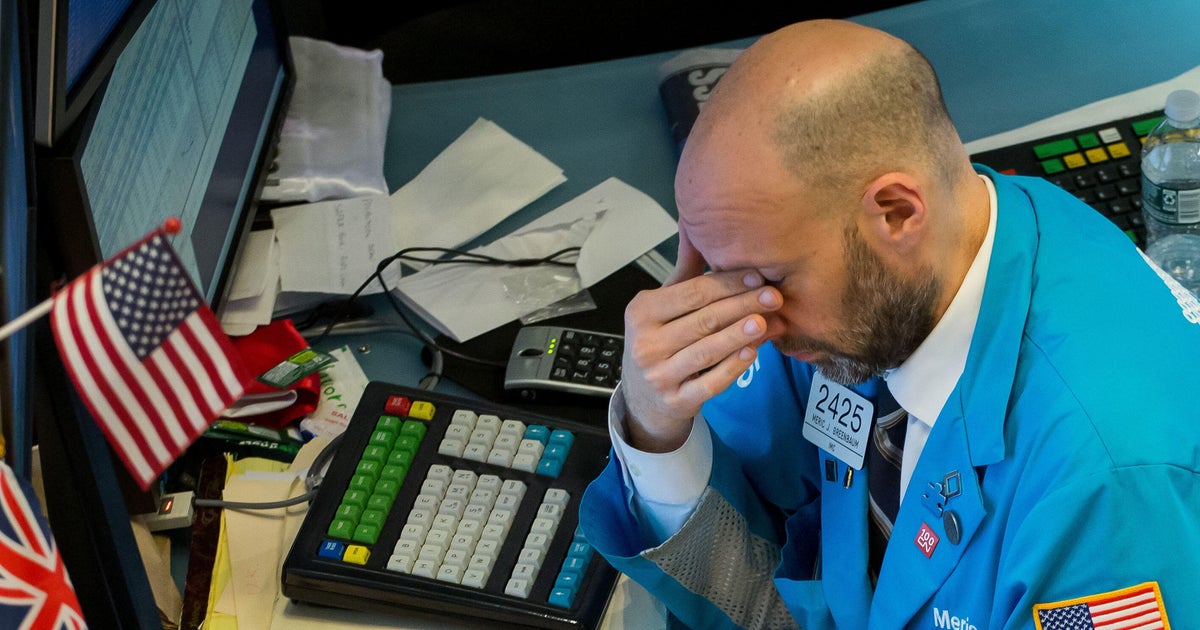
U.S. stock index futures pointed to a mixed open early Friday, November 6, 2026, following a steep Wall Street sell-off that sent the Nasdaq Composite down 5.5% into official market correction territory. The sharp downturn wiped out more than $1 trillion in combined market value across the Magnificent Seven mega-cap tech stocks in a single trading session. Investors are now assessing whether early premarket stabilization can hold as global markets digest the fallout from U.S. midterm election outcomes and prepare for critical labor market data.

What Changed
Wall Street suffered its steepest one-day decline since April 2025 on Thursday, November 5, 2026. The tech-heavy Nasdaq Composite plunged 1,422 points, or 5.5%, to close at 24,315, ending the session more than 10% below its recent peak. The broad-market S&P 500 tumbled 335 points, or 4.4%, to settle at 7,354, while the Dow Jones Industrial Average dropped 1,833 points, or 3.4%.
The catalyst for the drop centered on artificial intelligence and semiconductor firms following the decisive Democratic victory in both chambers of Congress. Market participants grew concerned that legislative oversight and state-level policy shifts could slow physical data center construction. Semiconductor heavyweights bore the brunt of the downturn: Micron Technology dropped 17%, Advanced Micro Devices slid 17.3%, and Nvidia fell 9.2%, turning negative for the year with a year-to-date decline of 2.6%.
By early Friday morning, index futures signaled a split opening across the board. Nasdaq-100 futures rebounded 1.2% and S&P 500 futures added 0.2% to 0.3%, while Dow Jones Industrial Average futures declined 0.8% to 0.9%, trading near 51,192.00.
Who Is Affected
The sudden shift directly affects millions of Americans who hold exposure to broad-market index funds, exchange-traded funds, and retirement accounts. Because technology and semiconductor firms occupy a major weighting in major benchmarks, broad equity holdings felt the drag immediately.
The sell-off extended into overseas equity markets overnight. In South Korea, the tech-heavy Kospi plunged more than 6%, triggering a 20-minute circuit breaker suspension after intraday losses exceeded 8%. Japan's Nikkei 225 fell 5.96%, closing at 57,434.77 to enter formal bear market territory, down over 20% from its June peak. European exchanges opened in the red, with the pan-European Stoxx 600 index dropping 1.26% in early deals.
What It Means for Your Money
For ordinary households and long-term savers managing 401(k) accounts or individual retirement portfolios, broad portfolio balances experienced sharp fluctuations this week. Heavy portfolio concentration in a small group of tech names means wider index funds mirror swings in semiconductor shares. The top seven tech companies shed more than $1 trillion in market capitalization on Thursday alone, led by Nvidia shedding over $440 billion.

Meanwhile, energy costs and borrowing rates remain tied to geopolitical developments. Energy prices showed marked volatility: international benchmark ICE Brent crude slipped to $96.93 per barrel early Friday after falling 8.7% on Wednesday to close under $100 for the first time since September. U.S. West Texas Intermediate futures hovered near $89.17 per barrel. Lower crude prices reduce immediate retail fuel inflation pressures, which directly influences borrowing rates across consumer credit lines.
The Wider Economic Context
Financial markets are recalibrating interest rate paths across major central banks. The Federal Reserve, Bank of England, European Central Bank, and Bank of Japan have all enacted interest rate increases in recent months. The Bank of England raised its benchmark borrowing rate by 25 basis points on Thursday, and Australia's central bank previously lifted its cash rate to an 18-year high of 4.85%.
Treasury yields have reflected these policy pressures. The 10-year U.S. Treasury yield recently hovered near 4.91%, while the 2-year Treasury note yield stood near 4.59% and the 30-year bond yield traded at 5.28%. Federal Reserve rate projections currently price in approximately a 70% probability of a 25-basis point rate hike at the upcoming December 9 meeting, based on CME FedWatch data.
Important Dates and Next Steps
Traders and consumers face several upcoming milestones on the economic calendar:
- Friday, November 6, 2026: The Bureau of Labor Statistics publishes the October nonfarm payrolls report. Consensus projections from Dow Jones anticipate 59,000 jobs added, compared to 29,000 in September, with the national unemployment rate projected to hold at 4.2%.
- Tuesday, November 10, 2026: CoreWeave is scheduled to report quarterly financial earnings following recent pressure on specialized cloud providers.
- Wednesday, December 9, 2026: The Federal Open Market Committee concludes its final scheduled policy meeting of the year to decide the target federal funds rate.
Frequently Asked Questions
Why did the Nasdaq Composite enter a market correction?
The Nasdaq Composite tumbled 5.5% on Thursday, closing more than 10% below its recent peak set in October. The retreat was driven by heavy selling across semiconductor and artificial intelligence infrastructure stocks following the U.S. midterm elections.
How did U.S. stock futures perform early Friday?
Nasdaq-100 futures rebounded 1.2% and S&P 500 futures edged up 0.2% to 0.3%. In contrast, Dow Jones Industrial Average futures fell between 0.8% and 0.9%.
What is the forecast for the October jobs report?
Economists polled by Dow Jones expect nonfarm payroll additions of 59,000 jobs for October, an increase from 29,000 in September. The national unemployment rate is projected to remain steady at 4.2%.
What happened to crude oil prices following the election?
ICE Brent crude dropped 8.7% on Wednesday to close below $100 a barrel for the first time since September, before trading near $96.93 per barrel on Friday morning. U.S. West Texas Intermediate futures traded near $89.17 per barrel.