
Astronomers have uncovered a strange cosmic hybrid the size of the entire solar system, glowing with a brilliant red light and producing a staggering amount of energy. For space science enthusiasts and researchers across Australia, this discovery provides a fresh perspective on how the earliest galaxies formed billions of years ago. Spotted by NASA’s James Webb Space Telescope, the object defies traditional classification by behaving like a star while radiating power typical of a black hole.
The Story at a Glance
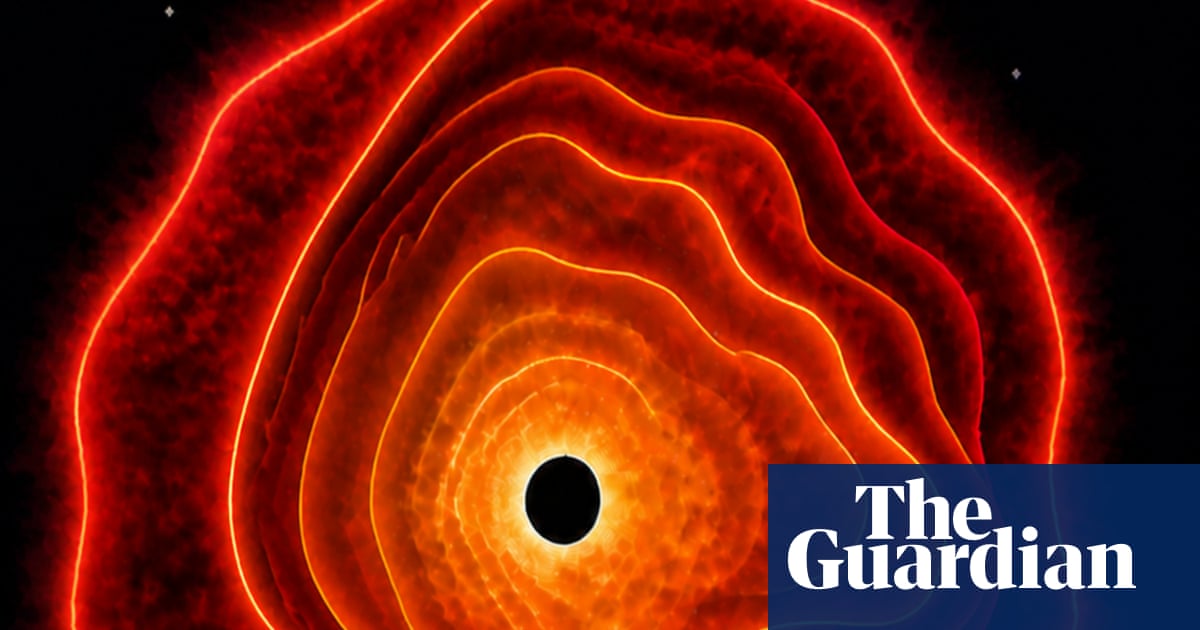
An international team of scientists has identified a completely new class of astrophysical object, dubbed a black hole "star". Located billions of light-years away in the constellation of Cetus, the unusual body formed approximately 660 million years after the big bang. Measurements indicate that while the entity resembles a massive star, it releases 100 billion times more energy than any conventional star can generate. This immense power output aligns much closer to the characteristics of a black hole wrapped in dense layers of gas.
How the Story Developed
The breakthrough began when researchers used the James Webb Space Telescope to search for distant galaxies in the early universe. After successfully analyzing a galaxy known as Mom-z14, which formed just 280 million years after the big bang, the team turned their focus toward an extremely bright red spot designated as MoM-BH*-1. Computer simulations quickly revealed that the light signature was not produced by nuclear fusion like a normal star. Instead, researchers realized they were observing a black hole heavily swaddled in gas shrouds, mimicking stellar radiation. This finding helps explain numerous similar anomalies captured in deep space archives.
Key People and Details
Lead researcher Dr Rohan Naidu, who performed the work at the Massachusetts Institute of Technology's Kavli Institute for Astrophysics and Space Research before moving to the University of Hawaii, spearheaded the investigation. The findings were officially published in the journal Nature. The object in question, MoM-BH*-1, represents the reddest body found in the telescope's image archive. Its light abruptly disappears below a specific wavelength, creating a dramatic visual profile unmatched by any known category of astronomical bodies.
We have found a new type of astrophysical object, a black hole star.
Reaction and Response
The astronomical community views the discovery as a potential turning point in understanding cosmic evolution. Scientists suspect that these black hole stars are not isolated anomalies but rather represent common seeds for present-day supermassive black holes found at the centres of galaxies like the Milky Way. Researchers believe these nascent objects may have governed early star formation, ultimately dictating when planetary systems could begin to develop.
What to Watch
With the identification of MoM-BH*-1, astronomers anticipate that many of the mysterious "Little Red Dots" appearing in deep space images will be classified as similar objects. Future telescope observations will test this hypothesis to determine how widespread black hole stars are across the early cosmos. Scientists will also investigate how these dense cosmic objects influence the lifecycle and structural growth of surrounding galactic neighborhoods.
Frequently Asked Questions
What is a black hole star?
A black hole star is a newly discovered cosmic object that combines traits of both entities, featuring a black hole wrapped in dense gas clouds so it radiates light like a star.
How much energy does MoM-BH*-1 produce?
The newly identified object produces roughly 100 billion times more energy than any known standard star in the universe.
When did this object form?
Measurements indicate the object formed approximately 660 million years after the big bang, roughly 13 billion years ago.
Why are scientists calling them little red dots?
Astronomers previously cataloged numerous tiny red specks in early universe telescope imagery, which researchers now suspect are examples of these black hole stars.
Who led the research team?
The research was led by Dr Rohan Naidu, an astronomer formerly at MIT and now at the University of Hawaii.