
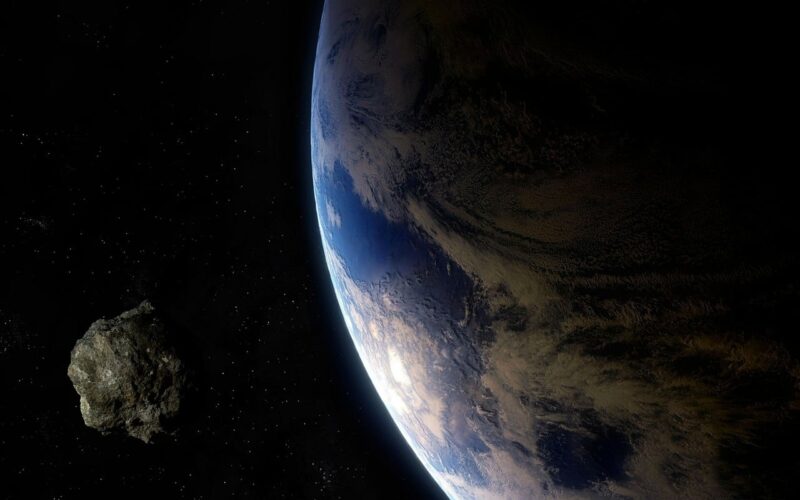
A tiny asteroid streak caught astronomers by surprise on Monday morning as it plunged into the atmosphere right off the coast of Western Australia. The flash of light lit up the dark night skies over the Indian Ocean, marking a rare moment in space tracking history.

Why This Is Trending
Space tracking systems picked up a small space rock heading straight for Earth just hours before it struck our upper atmosphere. The event quickly drew global attention because advance detections of incoming space debris remain exceptionally rare, serving as a live test of global planetary defence networks.
What Happened
The space object, designated as CERNQ52, was spotted by observers at the Mount Lemmon Observatory, operating as part of the Catalina Sky Survey. Early detections were also logged by the Pan-STARRS system. The object measured roughly one metre across — or about the size of a household washing machine.
It made atmospheric entry between Western Australia and Bali at approximately 16:07 UTC (just after midnight local time on Monday morning). Due to its modest size, the object disintegrated completely upon impact, burning up as a bright meteor fireball without posing any hazard to people on the ground or ships at sea.
What We Know So Far
Scientists and astronomical bodies moved quickly to calculate the object's path once the initial survey data hit the Minor Planet Center. Key details confirmed by tracking agencies include:
- Impact Location: Upper atmosphere over the Indian Ocean, northwest of Western Australia towards Bali.
- Impact Time: September 6, 2026, around 16:07 UTC.
- Size: Approximately 0.8 to 1 metre in diameter.
- Orbital Class: Identified as an Aten asteroid (having an orbit strictly inside Earth's orbit around the sun).
- Aten Asteroids
- Near-Earth space rocks whose orbital paths lie mostly inside Earth's orbit, staying under 1 astronomical unit (AU) from the sun.
- Kinetic Impact
- A planetary defence method involving hitting an incoming space object with a high-speed spacecraft to nudge its trajectory.
Adrien Coffinet, a member of the Minor Planet Mailing List, highlighted that CERNQ52 represents the first Aten-class asteroid ever detected in space prior to entering Earth's atmosphere. Previous pre-impact discoveries were exclusively Apollo asteroids, which orbit further from the sun than Earth on average.
Why It Matters
Predicting an atmospheric impact before it happens is a major feat for astronomical surveillance networks. This marks only the 13th time in human history that an asteroid has been spotted and tracked prior to hitting Earth.
While this washing-machine-sized rock was harmless, the successful detection validates the monitoring infrastructure funded by agencies like NASA's Planetary Defense Coordination Office. NASA established the office back in 2016 to improve responses to potential collision threats following decades of trajectory mapping. Simulations and live tracking of small objects help refine automated early-warning alerts for larger, potentially dangerous space rocks in the future.
What Happens Next
Researchers and skywatchers across Australia and Southeast Asia are gathering visual reports of the fireball. The International Meteor Organization has opened reporting channels for anyone who caught the flash on camera or saw it live.
Data gathered from CERNQ52's trajectory will be fed into orbital models to sharpen automated search algorithms used by sky surveys worldwide.
Frequently Asked Questions
Was the asteroid near Australia dangerous to people?
No. The object measured approximately one metre across and disintegrated completely in the upper atmosphere, producing only a harmless meteor flash.
How many times have astronomers spotted an asteroid before impact?
This event marks only the 13th time in history that astronomers have detected a space object prior to its entry into Earth's atmosphere.
Who detected asteroid CERNQ52 first?
The object was first spotted by the Mount Lemmon Observatory as part of the Catalina Sky Survey, with supporting early detections from Pan-STARRS.