Martin Luther King Jr. Day 2026: How America Is Remembering the Dream — and Debating Its Meaning
As the United States marks Martin Luther King Jr. Day in January 2026, the holiday once again functions as both a national moment of remembrance and a mirror reflecting unresolved questions about equality, justice, and civic responsibility. From large-scale public celebrations to pointed opinion pieces questioning progress since the 1960s, this year’s coverage reveals a country simultaneously honoring Dr. King’s legacy and reassessing how — or whether — his vision is being carried forward.
Main Topic Overview
Martin Luther King Jr. Day, observed annually on the third Monday of January, commemorates the life and work of the civil rights leader assassinated in 1968. Established as a federal holiday in 1983 and first observed nationwide in 1986, the day has evolved beyond remembrance into what many institutions describe as a “day of service.” In 2026, coverage surrounding the holiday reflects three dominant themes: public commemoration through local events, renewed debates over the relevance of King’s economic justice message, and ongoing questions about whether the holiday’s original intent is being fulfilled.
News Coverage
It’s Not Enough to Honor MLK’s Dream. We Have to Fund It

Time Magazine’s analysis reframes Martin Luther King Jr.’s legacy through the lens of economic justice, arguing that symbolic recognition has outpaced material investment. The piece highlights how King’s later work focused heavily on closing the racial wealth gap, a theme the article connects to modern debates about artificial intelligence, labor displacement, and unequal access to capital. Rather than focusing on ceremonial remembrance, the article suggests that policy choices and funding priorities represent a more accurate measure of national commitment to King’s ideals. By placing MLK’s message within current economic systems, the coverage positions the holiday as a prompt for structural evaluation rather than historical nostalgia.
Is MLK Day Still a Federal Holiday and What to Know in Nashville

This local explainer addresses recurring public confusion around the status of MLK Day as a federal holiday, using Nashville as a focal point. Beyond clarifying government closures and observances, the article outlines scheduled marches, educational programs, and service initiatives across the city. The framing emphasizes how local governments and communities operationalize the holiday, translating a national observance into regional expression. The piece underscores how MLK Day continues to rely on local engagement to remain visible and relevant beyond its designation on the federal calendar.
Nothing Has Changed Since Martin Luther King's Dream Speech | Opinion

This opinion column presents a sharply critical view of progress since King’s 1963 "I Have a Dream" speech, arguing that many of the inequalities King highlighted remain entrenched. While clearly labeled as commentary, the piece reflects a broader strand of MLK Day discourse that uses the anniversary as a checkpoint rather than a celebration. By contrasting historical rhetoric with present-day social indicators, the column contributes to a recurring national debate: whether the holiday marks achievement, stagnation, or unfinished work.
Celebrate the Legacy of Dr. Martin Luther King Jr.: MLK Day Events
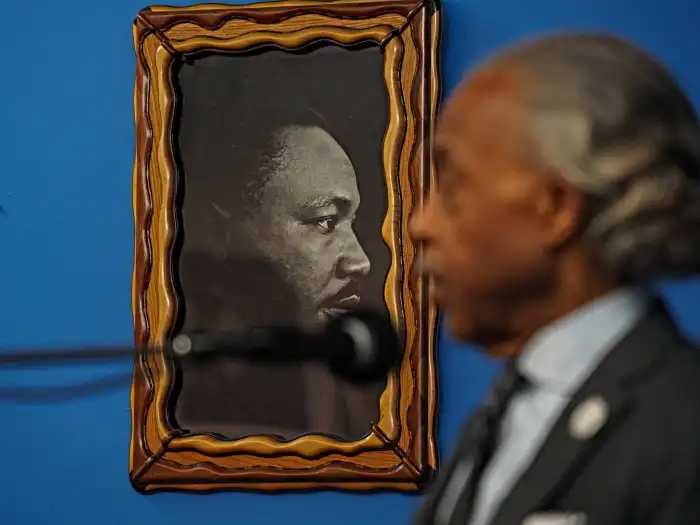
amNewYork’s roundup focuses on the cultural and civic dimensions of MLK Day in New York City, detailing parades, educational panels, and artistic tributes. The article highlights how large metropolitan areas often frame the holiday as both a remembrance and a community-building exercise. By emphasizing accessibility and participation, the coverage illustrates how public events remain a primary way many Americans engage with King’s legacy, particularly in cities with deep civil rights histories.
Here's How to Mark MLK Day in Springfield, From a March to R&B Trivia

This piece showcases how smaller cities personalize MLK Day observances through a mix of activism, education, and entertainment. Springfield’s schedule — combining marches, lectures, and cultural programming — reflects how the holiday adapts to local identities while maintaining its core themes. The article suggests that the decentralized nature of MLK Day may be one of its defining features, allowing communities to interpret King’s legacy through their own social contexts.
Summary / Insights
Taken together, coverage of Martin Luther King Jr. Day 2026 reveals a dual narrative. On one side, communities across the country continue to observe the holiday through marches, ceremonies, and service projects, reinforcing its role as a civic tradition. On the other, opinion and analysis pieces increasingly question whether commemoration alone aligns with King’s broader message, particularly his emphasis on economic justice and systemic change. This tension — between remembrance and reassessment — has long accompanied MLK Day and remains central to its contemporary meaning.
Historically, this is not the first time the holiday has prompted debate about substance versus symbolism. Similar discussions emerged during milestone anniversaries in the 1990s and early 2010s, suggesting that MLK Day consistently functions as a barometer of national self-reflection. As 2026 unfolds, the coverage indicates that the holiday’s relevance lies less in consensus and more in its ability to reopen enduring conversations about equality, responsibility, and progress.
TL;DR
MLK Day 2026 blends public celebration with pointed reflection, as communities honor Dr. King’s legacy while journalists and commentators revisit unresolved questions about economic justice and social progress.