
Tectonic stress along Southern California's major fault lines has surged to its highest level since the year 1249, raising serious concerns that "The Big One" could strike sooner than previously projected. Grounded in new computer simulations mapping 1,000 years of seismic history, scientists warn that critical fault intersections are nearing a dangerous breaking point.
What People Are Searching For
Online search activity spike around recent seismic studies has driven millions of Americans to ask whether a massive earthquake in California is imminent. Prediction markets like Kalshi have even listed contracts on whether a magnitude 8.0 quake will hit before 2027, highlighting intense public interest and widespread anxiety surrounding the state's prolonged seismic silence.
What Is Confirmed
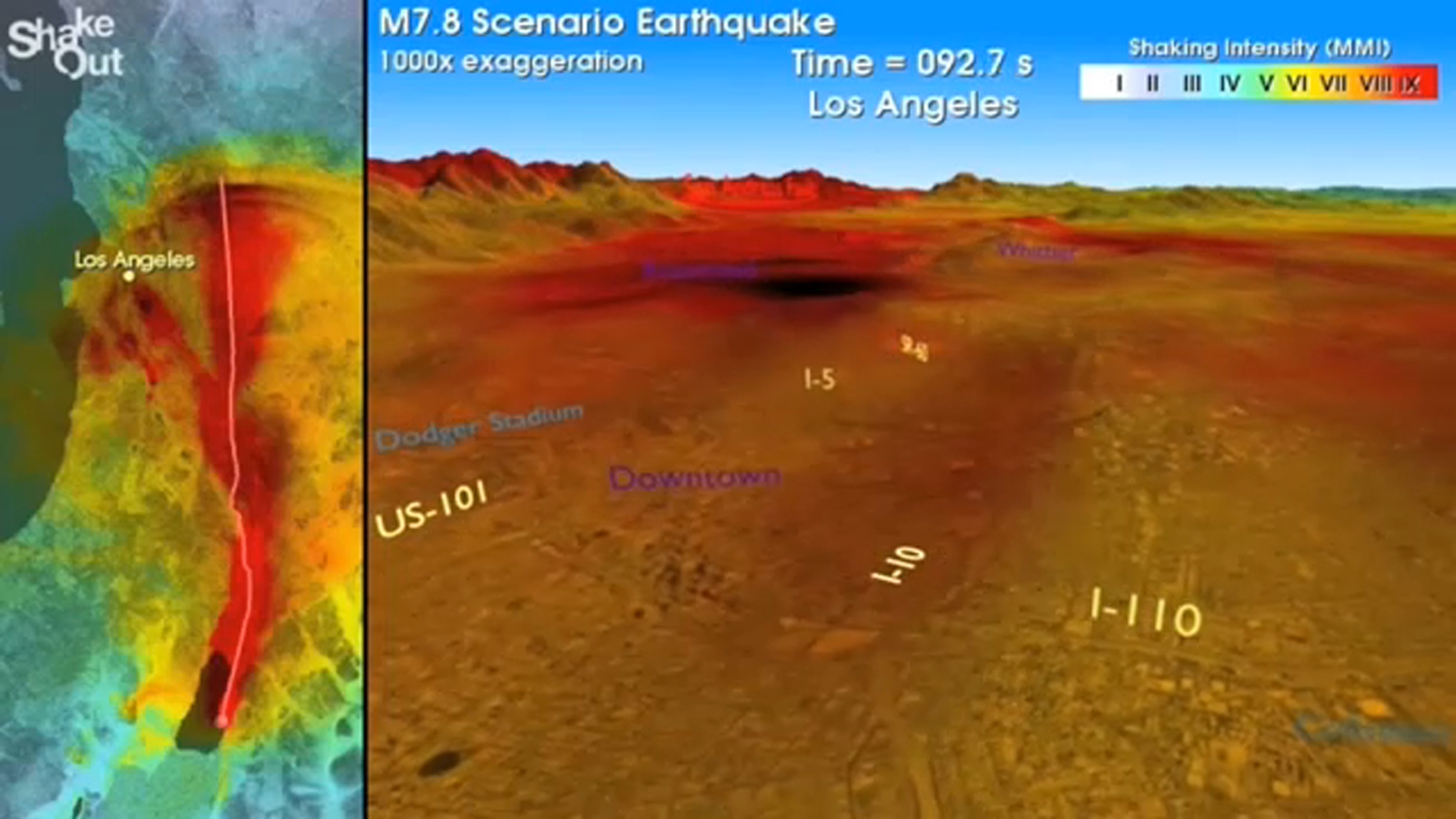
Geophysicists from the University of Bern, Caltech, and other research institutions confirmed that stress levels at the Cajon Pass—where the San Andreas and San Jacinto faults intersect—are critically high. A new study by geophysicist Liliane Burkhard revealed that these stresses are the highest observed in 1,000 years. Furthermore, Ahmed Elbanna, director of the Statewide California Earthquake Center, estimated that a magnitude 7.8 rupture along the southern San Andreas Fault could cause up to $1 trillion in total economic damage across Southern California, including $300 billion from post-quake fires alone. This represents a steep jump from 2008 estimates of $213 billion, driven by expanding infrastructure and population density. The last major rupture along this southern segment occurred in 1857 during the Fort Tejon earthquake.

What Is Unconfirmed
Despite heightened stress, seismologists emphasize that exact earthquake timing remains fundamentally unpredictable. Scientists cannot confirm whether the Cajon Pass will act as a "Gate Closed" barrier that stops a rupture or a "Gate Open" conduit that allows both faults to snap simultaneously. Additionally, market predictions hinting at an imminent magnitude 8.0 event before 2027 are viewed by analysts as extremely unlikely based on historical data, given that California has no recorded magnitude 8.0 quake in modern history.

The Bigger Picture
The potential disruption extends far beyond shaking structures. Critical aqueducts, power lines, and internet cables cross the Cajon Pass directly, threatening food, power, and water supply chains across major metropolitan centers like Los Angeles. As seismologist Dr. Lucy Jones noted, social disruption and financial devastation could far outweigh immediate physical hazards, leaving millions without essentials for weeks. This ongoing strain follows broader patterns of regional activity, including recent Southern California back-to-back quakes that kept residents on high alert.
Latest Status
State agencies continue pushing retrofits and public preparedness initiatives, emphasizing basic actions like "drop, cover, and hold on." While the fault could remain quiet for years, scientists urge residents and local governments to prepare immediately rather than waiting for the inevitable snap.
Frequently Asked Questions
Is a magnitude 8.0 earthquake guaranteed to hit California soon?
No. While tectonic stress is extremely high, forecast models and analysts consider a magnitude 8.0 quake before 2027 highly unlikely. The largest recorded earthquake in California history was the estimated 7.9 magnitude Fort Tejon quake in 1857.
Why is the Cajon Pass so important to California earthquake research?
The Cajon Pass is the critical geographic intersection where the San Andreas and San Jacinto fault systems meet. Stress accumulation here determines whether an earthquake stays confined to a single fault or triggers a massive double-fault rupture.
How much damage could the next major San Andreas earthquake cause?
Updated estimates from the Statewide California Earthquake Center project up to $1 trillion in total economic damage. Expanding population, increased reliance on fragile power grids, and potential post-quake fires account for the massive cost estimate.
Can scientists predict the exact date of 'The Big One'?
No. Despite advanced 1,000-year stress simulations and modern monitoring systems, seismologists cannot predict the exact minute, day, or year an earthquake will occur. It could happen tomorrow or decades from now.